
Latest posts
August 20, 2026PRV (Piscine orthoreovirus) is a virus that affects the heart and muscles of salmonids. This can cause major losses in aquaculture and impact ecosystem health. But until now it was unknown how widespread this virus is among Icelandic salmonids. At Keldur, the Institute for experimental pathology, a team led by Dr. Birkir Þor Bragason set out to find more about PRV in Iceland.
In Iceland, salmonids (Arctic charr, Atlantic salmon and brown trout) are important fish culturally and economically. PRV is found in these fish worldwide. So, the team at Keldur set out to understand whether this virus is also present in Icelandic salmonids and how often it occurs.
Determining if a fish has the virus
First, they had to catch fish. Birkir, Heiða Sigurðardóttir, Marina de la Cámara and Árni Kristmundsson who work in Keldur took care of the sample collection that took place between 2015 to 2025. They caught fish of different species and ages in the wild and from aquaculture. In total, 837 Atlantic salmon, 254 Arctic charr and 105 brown trout were used in this study. They came from eight different lakes, three restocked streams and eight farms across the country.
Heiða and Marina then tested the fish for the virus (find the structure of the virus in the illustration below). And Marina checked whether there were different variants of the virus and whether these variants were connected to the fish species or environment.
Lastly, Árni looked into the tissue of the infected fish to see how the virus affects the structure of the tissue.
Illustration of the structural proteins of PRV.
PRV can be found in Icelandic salmonids
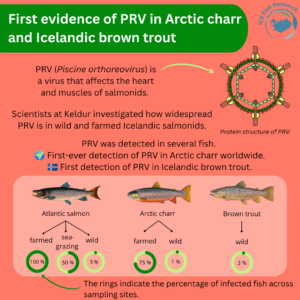
They found PRV in quite a few of the fish. PRV was detected in all three species: Arctic charr, Atlantic salmon and brown trout, and in both farmed and wild fish. Furthermore, they found different strains of PRV. In the figure below you can see the percentages of fish that had PRV detected. For example, all farmed Atlantic salmon had a PRV infection. And PRV was detected in 75% of farmed Arctic charr. They also looked at whether infection rates were linked to the environment the fish lived in. They observed higher infection rates in farmed Atlantic salmon and Arctic charr than in wild fish. Few wild brown trout were infected.
Notably, this is the first detection of PRV in Arctic charr worldwide and in brown trout from Iceland.
A figure that shows the fish included in the study. The rings indicate an average percentage of PRV-positive cases across locations.
What does this mean for Iceland?
This is the first study to show PRV infection in Arctic charr and Icelandic brown trout. This information helps us better understand which fish species are affected by PRV.
Fortunately, PRV is not causing major effects in farmed and wild populations in Iceland at the moment. But researchers need to stay alert, because changes in environmental conditions (such as warming of the waters) can lead to an increase in PRV infections in Iceland.
That is why continued study of the virus is important for understanding how it affects Icelandic salmonids. An important next step is also testing the non-native salmonid species (pink salmon and rainbow trout) to see how they are affected. [...]Read more...
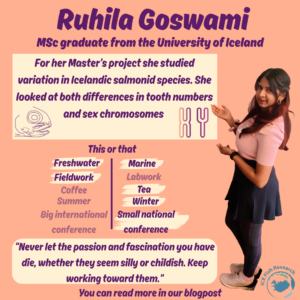
August 14, 2026Congratulations to Ruhila Goswami, on finishing her master’s in biology! For the past two years Ruhila has been studying biology at the University of Iceland. For her master’s projects, she looked at differences in tooth numbers and sex chromosome in Icelandic salmonid species.
Congratulations on your graduation!
Journey to the north
As far as she can remember, Ruhila has always wanted to study biology and eventually do research. Even as a young child she was very interested in nature and loved observing nature and wildlife. She enjoyed watching Discovery, Animal Planet and National Geographic. Her passion for genetics didn’t come until a bit later in life, when she was in high school. However, it was love at first sight. Ruhila was fascinated by genetics, cloning and the inheritance of traits.
While doing her undergrad in biology Ruhila got to do an internship in Iceland. Where she worked at the Arctic charr lab at the University of Iceland. Working with the genetics of Arctic charr. Maybe it was the Icelandic weather, the wonderful people she met or the Arctic charr itself. But something made Ruhila think of Iceland when it came time to choose where she wanted to do her master’s studies.
Ruhila during her summer internship in Iceland.
From teeth to sex chromosomes
Ruhila’s master’s project was a combination of two projects both focusing on differences between the salmonid species Arctic charr and Brown trout. In one part she looked at variation of tooth numbers. In the other part she looked at differences of sex chromosomes.
Different fish have different mouths and different numbers of teeth depending on what they like to eat. Ruhila found differences in tooth numbers between Arctic charr and Brown trout. It was very interesting that teeth on some bones show so much difference while others show very little.
Ruhila presenting her award-winning poster at a conference.
As for the sex chromosomes. Salmonids have these genes called “jumping genes” which can “jump” around the genome moving from place to place. One of these “jumping genes” is called sdY which is a sex determining gene (effects whether the fish is female or male). In her project Ruhila looked at where this gene is located. She found its location differed between the species.
Ruhila had a lot of fun during her masters. She really enjoyed the fieldwork and the electrofishing she had to do. As well as the long days of lab work. Still finishing a master’s thesis is not all fun and games. Ruhila found the last weeks of finishing writing the thesis itself the least enjoyable part. However, once all is said and done, she is extremely proud of her thesis.
And so, the story continues
Now with the master’s thesis completed Ruhila should hopefully have some more free time to spend with her cat Ari or doing other things she loves. Ruhila loves baking and cooking new dishes or trying new cuisines in restaurants. She also loves visiting nature parks, beaches and exploring tide pools. Ruhila is also a big fan of traveling and wants to visit every aquarium and zoo she can.
Ruhila enjoys spending time with her pets. Her cat Ari (left) and dog Crystee (right).
However, for a curious and passioned person like Ruhila the work never stops. She is currently planning on continuing her studies by doing a PhD and is working on securing funding for that project.
We wish her all the best luck and leave her with some wise words from herself: “Never let the passion and fascination you have die, whether they seem silly or childish. Keep working toward them”. [...]Read more...
August 6, 2026Did you ever wonder if your Arctic charr filet came from a happy fish? Sabine Lobligeois is a PhD student at Hólar University and studies how we can tell if aquaculture fish are stressed. Sabine never envisioned herself working in aquaculture or working with fish at all, but animal behaviour always intrigued her. She was curious to understand why animals behave a certain way and what shaped their behaviour. While working at the Arctic charr breeding station in Hólar she noticed that some fish behaved differently and so she got curious. From previous studies at the University of Iceland at Hólar she learned that fish do grow better in an enriched environment, compared to just an empty tank. Fish also have personalities with some fish being more explorative and dominant, whereas others are a bit more hesitant and avoid confrontations. These personalities correlate with how well fish grow, so one could potentially select for growth by choosing certain personality traits.
Small Arctic charr during an experiment to test boldness. The faster thesh comes out of hiding and the more time it spends out in the open the bolder the fish.
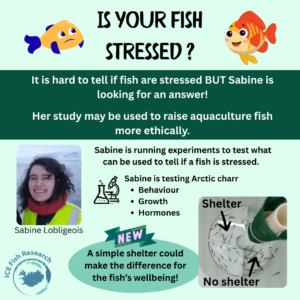
In her experiment, Sabine combines behavioural and physical data to find which are good predictors of stress and, therefore, fish welfare. She raised aquaculture Arctic charr in plain and enriched environments and exposed them to stressful situations, such as being taken out of the tank for 30 seconds. She took multiple measurements at specific timepoints in development, combining behavioural and physical traits. To measure long-term stress of being raised in a plain environment Sabine measured growth and fat storage in the liver, as many fish store fat in the liver (e.g. hepatosomatic index: the weight ratio between total body weight and liver weight). Short-term stress was measured by taking blood samples shortly after the stressful event and measuring the stress-hormone cortisol. Comparing how different measurements correlate Sabine aims to find a reliable measure of fish welfare.
Research on welfare in aquaculture fish is so important because fish are grown in high-density environments with little to no enrichment (e.g. plants or additional platforms to hide from the local bully). And even though aquaculture does optimise for growth, for profit reasons, and growth is a good indicator of fish welfare, it is not the whole story. In traditional life-stock farming animal welfare has been a topic of research for decades and awareness has grown greatly. Whereas in fish some people are still debating if they can even feel pain, so there is still a long way to go. The importance of this research field is also growing as more and more of the fish we consume is coming from aquaculture farms instead of being caught in the wild.
Juvenile Arctic charr raised with an additional hiding place in their tank. Such a simple structure can help to reduce aggression, as fish can hide form other fish or humans passing by. This could be a simple solution to improve a fish’s wellbeing and may even boost growth!
Sabine hopes to contribute to raising public awareness around fish welfare in aquaculture and deliver science-based advice for aquaculture farmers to improve rearing conditions for fish. Sabine is now in the homestretch of her PhD and soon will be ready to present the insights she gained from her project, so stay tuned for the results!
Sabine Lobligeois, PhD candidate at the University of Iceland. [...]Read more...

May 22, 2026Have you ever wondered how salmonids migrating up a river get tracked? And why this matters?
Fish counts help biologists understand whether fish populations are healthy, whether conservation efforts are working, and how ecosystems change over time. Right now, this often means people are spending hours watching video from underwater cameras. The work is slow and expensive.
João Rodrigo da Silva Martins from the University of Iceland and The Marine and Freshwater Institute wanted to change this. Together with his supervisor Hafsteinn Einarsson and colleagues Hlynur Bárðarson and Jóhannes Guðbrandsson he explored whether AI could automate part of this work. The publication can be found here here.
Using AI to track fish
The team used modern AI to identify fish species automatically from underwater videos.
Around Iceland there are automated fish counting stations in rivers where underwater footage gets recorded. Experts watch thousands of these videos to classify the fish they see. João tested whether AI could take over some of this work. The results were promising. The AI could identify fish accurately and quickly. This would give experts more time to monitor rivers and focus on more interesting scientific questions.
On the right: a fish counter installed in rivers. On the left: an example of underwater footage of a fish.
The model identified whether a fish was present in a video frame with 99% accuracy. This is almost the same level of accuracy as a human expert.
The system could also tell the difference between salmon, trout, and charr with 97% accuracy. This is impressive because even experienced freshwater scientists can sometimes struggle to tell these species apart.
How does AI recognise a fish?
The researchers used an AI model that had already learned from millions of online images and captions. Because the model had seen so many examples, the researchers could ask questions such as: “Does this look like a salmon-like fish swimming?”
The method works in two steps. First, the detections stage filters the raw video. It removes frames without fish and finds clips that contain a single fish.
Second, the classification stage identifies the species. The model creates a unique “fingerprint” for each frame containing a fish. It then combines information from several frames and creates an average fingerprint. This helps reduce mistakes caused by poor lighting or unusual fish movements. The system then decides whether the fish is a salmon, trout, or charr.
This image helps researchers understand how the AI model identifies fish species. Red areas show the parts of the image that most affect the model’s performance when hidden. This suggests that the model relies on fish body shape and head features rather than background information.
Why this research matters
This method could help fisheries management agencies, such as The Marine and Freshwater Institution here in Iceland. But it is also useful for similar organisations abroad.
Many organizations collect more fish videos than people can realistically review by hand. As a result, a lot of valuable footage is never used.
AI could act as a first filter. It could identify clips that contain fish and classify species that are easy to recognize. Experts would then only need to review unusual fish or difficult cases.
Better and faster fish counts could improve stock assessments, support more accurate fishing quotas, and lead to better conservation decisions.
João and his colleagues want to make AI tools easier to use in ecology and environmental science. These fields often have large amounts of data but too few people to process it. Their work shows that AI can help solve this problem. The hope is that this approach will help research groups, agencies, and non-profit organisations make better use of their data.
https://icefishresearch.com/wp-content/uploads/2026/05/Swimming-salmon.mp4
A salmon swimming past a fish counter. [...]Read more...

May 15, 2026A new publication spotlight by Nickel et al. 2025 called “Seasonal shifts and individual variation in juvenileAtlantic cod diel migration at nearshore nurseries”. doi: 10.3354/meps15056More publications by Nickel are found at ORCID: https://orcid.org/0009-0008-2327-5230
What is the general topic of the paper?
Many fish move around in regular patterns. One common type is called diel migration (dægurfar eða lóðréttar dægurgöngur), which means they move in a daily cycle over 24 hours. These movements can help fish find food, avoid predators, and grow faster. In this study, researchers looked at how young #Atlanticcod move back and forth each day in coastal nursery areas in Iceland and Norway. They focused on how their movements change with the seasons and how individual fish behave differently from one another.
Figure 1. Study site locations in Iceland and Norway (black diamonds) and acoustic receiver positions within each site (red circles). Bathymetry and land areas are shown with grey contour lines.
What are the main findings?
In Iceland, young cod followed a clear daily pattern: they moved closer to shore at night and farther offshore during the day. In Norway, some fish followed this same pattern, but others did the opposite.
The timing of these movements matched changes in daylight, especially at sunrise and sunset. During the Icelandic summer, when the sun barely sets, the fish stopped their usual daily movements and stayed in the middle of the fjord instead. Even though most fish followed similar seasonal patterns, individuals still differed in how often they moved and in the direction they moved. This tells us that both the environment and each fish’s own traits shape their behavior.
Figure 2 and 3. Predicted mean distance to land (DTL) across the day (hourly) and site (A = Iceland, B = Norway), based on results from a generalized additive mixed model (GAMM). White lines indicate the mean times of sunrise and sunset for each detection week and site.
The most exciting result is that nonstop summer daylight in Iceland stops the fish from doing their usual daily migration. This shows how extreme light conditions in the Arctic act like a natural clock, guiding animal behavior in surprising ways.
What methods were used?
The researchers used a tracking method called acoustic telemetry. Small transmitters were placed inside young cod. These transmitters sent signals that were picked up by underwater receivers placed across a fjord in Iceland. Every time a fish passed a receiver, its location and time were recorded. This gave a detailed picture of where each fish went throughout the day and across seasons.
Figure 4. Releasing young Atlantic cod back into the wild after giving them acoustic transmitters.
Figure 5. Infographic on what acoustic telemetry is and what it does.
Who should read this research?
This study is great for people interested in fish behavior and ocean ecology. It’s also useful for fisheries managers in Iceland and Norway, since cod are extremely important to their economies and ecosystems. Additionally, researchers studying Arctic and sub-Arctic environments, animal behavior, and biological rhythms may also find these results helpful.
What could future follow-up studies look like?
It is now known that light plays a big role in guiding daily fish movements—but there’s still more to learn. Future studies could look at:
How predators affect when and where fish move
How temperature and water depth influence behavior
Where and when fish feed
How these movements affect growth
Studying different sizes and ages of cod would give an even clearer picture of what shapes these daily migrations.
Why is this research important beyond academia?
Understanding how young cod move and respond to light helps explain how they grow and survive. This knowledge can help improve fisheries management and conservation. As climate change shifts habitats and light patterns in northern oceans, this research can help predict how fish behavior might change in the future.
co-authors and collaborators to highlight
This project took years of hard physical and mental work. It involved hauling heavy equipment, long days on boats, and many hours analyzing data. The co-authors and collaborators of this study are thanked for their energy and dedication—especially Michelle Valliant, Ragnar Edvardsson, Halldór Sveinbjörnsson, Antoine Morel, and Even Moland. This research truly was a team effort. [...]Read more...

May 7, 2026What do a hippo and a fish have in common? They come in small sizes! Miniaturisation is when animals evolve to be smaller over time. This often happens on islands or in places where populations are cut off from others. Scientists still don’t fully understand why this happens.
Dr. Kalina Kapralova and other researchers from the University of Iceland (LUVS and Keldur), Hólar University, and the University of St. Andrews are working together on this project. They are using the Icelandic Arctic charr to answer their research questions.
Dwarf Arctic charr as a study system
The dwarf Arctic charr (shown below in the video) offers the chance to study evolution in action. This fish has evolved tiny forms repeatedly over a relatively short time and in closely related populations. The researchers will try to figure out how and why this happens. This will help reveal the processes that generate and maintain biodiversity. This information provides insight into how species may adapt to rapidly changing environments such as those shaped by climate change.
https://icefishresearch.com/wp-content/uploads/2026/05/Dwarf-charr.mov
A small benthic Arctic charr swimming.
Why do some Icelandic Arctic charr stay small?
To understand why some Icelandic Arctic charr grow little, mature early, and look juvenile for their entire lives, Kalina and her team are looking both at wild populations and laboratory dwarf charr families. In the lab they can track traits from parents to their offspring. In wild fish, natural mixing of genes over thousands of years helps find DNA regions connected to body size.
Stripes carry a surprising amount of information
Parr marks are vertical stripes found on the body of juvenile salmonids and dwarf Arctic charr often keep these parr marks into adulthood. Kalina and her team found that these parr marks vary genetically and are passed from parents to offspring. Furthermore, they found a weak but consistent link between parr marks and body size making parr marks a non-invasive way to study miniaturisation.
Parr marks in wild and laboratory-reared small benthic Arctic charr. [...]Read more...
April 30, 2026In January this year, Guðbjörg Ósk Jónsdóttir along with co-authors Finnur Ingimarsson, Sigurður Sveinn Snorrason, Sarah Elizabeth Steele and Arnar Pálsson. Published a paper in the journal Evolutionary Biology. The paper is titled “Variation of Tooth Traits in Ecologically Specialized and Sympatric Morphs.”
Why fish teeth?
When one thinks about variation in teeth, one does not generally think of fish. Rather one would likely think of mammals. Like the incisors of rodents, canine teeth of carnivores or the specialised moles of many herbivores. Though fish teeth are generally not as variable as mammalian teeth does not mean that they don’t vary. Shape, angle and number of teeth can be highly variable in fish. Previous research has shown that differences in tooth traits are often linked to specialization in feeding. With groups that specialize on one type of prey having different teeth than groups that specialize on another type of prey.
Drawing of a charr head from the paper. Shows the bone used in the study. B) Maxilla, C) Premaxilla, D) Palatine, E) Vomer, F) Glossohyal and G) Dentary.
The study setup
For this paper the authors were interested in examining whether the four Arctic charr morphs in lake Þingvallavatn had different tooth characteristics. If you want to learn more about the Þingvallavatn charr morphs you can read our previous posts here and here. Briefly, the four morphs are generally classified as two benthic morphs (small and large benthivorous charr) and two pelagic morphs (planktivorous and piscivorous charr). The benthic morphs feed on prey which live on the bottom of the lake. However, the pelagic morphs feed on prey which live in the water column.
Arctic charr were collected from lake Þinvallavatn during the summers of 2020 and 2021. After collecting the fish, they removed the bones. If you want to learn more about how they did that you can read this previous post. They then counted teeth on six bones and measured the angle of teeth on one bone (maxilla). See figure above to see the bones they used for this study.
Boiling fish heads can be a time-consuming task. Here is Guðbjörg removing bones.
Tooth numbers differ but not by much
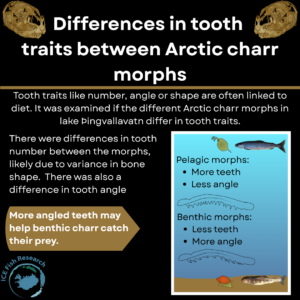
Tooth number generally increased with fish size and tooth number differed between the morphs. With the pelagic morphs having more teeth. However, there were expectations from this pattern. Tooth number on the premaxilla bone did not change with the fish’s size nor did it differ between the morphs. The authors ponder how this could be, wondering if tooth development on that bone is more regulated than for the other bones.
The authors also highlight that the tooth number differences between morphs were small. Maybe a difference of one to three teeth on a bone that has ten or more. Because of this the authors think tooth number differences don’t make much of a difference for the fish. However, since tooth number correlates with bone shape. The authors think differences in bone shape may explain the differences in tooth number.
The beautiful lake Þingvallavatn
More angled teeth for benthic charr
Unlike tooth number, tooth angle did not change with fish size. However, there were differences in tooth angle between the morphs with benthic morphs having more angled teeth than the pelagic morphs. Unlike with tooth numbers the tooth angle differences were rather large. For example, there was a 18.5° difference between the small benthic charr and the planktivorous charr.
The authors think this difference may be adaptive. In the paper, they discuss how more angled teeth can help the benthic morphs during feeding. Keep in mind that benthic morphs eat snails from the lake bottom which may have some sediment on them. One idea is that more inward angled teeth allow fish to hook their teeth underneath snails and dislodge them from the bottom. Another idea is that the angled teeth may hold the prey in place while it is being cleaned before swallowing.
Anyone interested in reading more can find the full paper here: https://link.springer.com/article/10.1007/s11692-026-09665-2?utm_source=researchgate.net&utm_medium=article#Sec1 [...]Read more...
March 25, 2026Earlier this year Han Xiao along with co-authors Arnar Pálsson, Zophonías O. Jónsson and Sigurður S. Snorrason published a paper in the journal Molecular Ecology. In this paper they explored genetic and shape differences between Arctic charr morphs in two neighbouring lakes in Iceland.
They collected different Arctic charr morphs from lake Þingvallavatn and lake Úlfljótsvatn between 2015 and 2018. Then examined the genetic differences and differences in head shape between Arctic charr morphs across these two lakes.
The Þingvallavatn-Úlfljótsvatn system
Four Arctic charr morphs live in lake Þingvallavatn. They are the large benthivorous (LB-charr), small benthivorous (SB-charr), planktivorous (PL-charr) and piscivorous charr (PI-charr). These morphs are well researched. They are known to differ in many ways for example diet, spawning time, shape and genetics. We have even discussed these morphs in previous blogposts.
Lake Þingvallavatn is not a completely isolated lake. It is connected to lake Úlfljótsvatn. Which is a smaller lake slightly south (downstream) of Þingvallavatn. All four Þingvallavatn charr morphs are also found in Úlfljótsvatn. Fish can migrate downstream from lake Þingvallavatn towards lake Úlfljótsvatn. There is a difference in abundance between the lakes. For example, PL-charr is the most abundant in Þingvallavatn but the LB-charr is most abundant in Úlfljótsvatn. Also, the SB-charr is very rare in lake Úlfljótsvatn. Likely because of low migration from lake Þingvallavatn and low survival due to as the environment is very different between the two lakes.
Lake Þingvallavatn is a larger and deeper lake compared to Lake Úlfljótsvatn. Lake Þingvallavatn is a very diverse lake with different pelagic and benthic prey for the Arctic charr to eat. However, lake Úlfljótsvatn is less diverse with mainly benthic prey available for Arctic charr. Lake Úlfljótsvatn has a very restricted pelagic zone. Which is the niche used by PL- and PI-charr. As well as a limited uneroded lava bottom. Niche used by SB-charr.
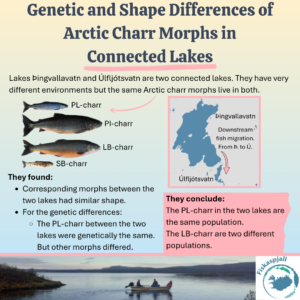
An image from the paper itself (Xiao et al., 2026). Left shows the four Arctic charr morphs. Right shows a map of lakes Þingvallavatn and Úlfljótsvatn.
What did they look for and what did they find
Highly diverse Arctic charr morphs found across connected lakes is very rare. Therefore, this system is unique and interesting. It provides an opportunity to study how sympatric morphs can coexist across connected lakes. The researchers hypothesized that the charr morphs in the two lakes evolved once. They also think that these Arctic charr morphs could be an example of a metapopulation structure. That is a population made of many subpopulations.
Their results showed minor variations in shape. Generally, corresponding morphs between the two lakes had similar head shape. Especially the two PL-morphs, which had almost the same shape. The genetic data gave very interesting results. The two PL-morphs from the two lakes are genetically the same. However, the two LB-morphs across the lakes are genetically different.
Han Xiao holding an Arctic charr.
What do the results mean
This let the researchers to conclude that the PL-charr across the two lakes could be the same population. We can look at the two lakes as a source-sink system for this morph, where Þingvallavatn is the source and Úlfljótsvatn the sink. Because of the limited pelagic zone in Úlfljótsvatn they find it likely that the PL-charr there has low fitness. Diet data also supports this as the PL-charr prey on benthic food in Úlfljótsvatn, something they don’t do in Þingvallavatn where they have the option to feed on pelagic prey. Therefore, the researchers hypothesized that the PL-charr in Úlfljótsvatn is kept from extinction with regular migrations of PL-charr from lake Þingvallavatn.
The LB-charr is a different story, based on the genetic differences. The researchers think that the LB-charr in Úlfljótsvatn could be its own population. Which may even be spawning in lake Úlfljótsvatn. That is to say each lake has its own local LB-charr populations with its own spawning grounds. Despite being genetically different these two LB-charr populations are ecologically similar (i.e. use similar ecological niches in the two lakes).
What a lovely day to go fishing.
For the PI-charr it was more difficult to understand the relationship across the lakes. The PI-charr in Þingvallavatn were shown to have mixed ancestry between PL-charr and LB-charr. Many individuals are genetically closer to PL-charr while some are closer to LB-charr. Within lake Úlfljótsvatn the PI-charr also have mixed ancestry, between the PL-charr and LB-charr from lake Úlfljótsvatn. Where a higher proportion of PI-charr cluster with LB-charr than in Þingvallavatn. This could mean that the PI-charr is hybridising with the LB-charr, i.e. PI-charr mates with an LB-charr. Hybridization between these two morphs does occur in Þingvallavatn though it appears more common in Úlfljótsvatn. Since Úlfljótsvatn is a smaller lake, it may be that the spawning grounds of these two morphs overlap more than in Þingvallavatn.
In conclusions
Taken together they found a relatively stable coexistence of the sympatric charr morphs in lake Þingvallavatn. However, in lake Úlfljótsvatn the coexistence is not stable. In that lake there is weaker reproductive isolation between morphs. Also, some morphs rely on downstream migration from lake Þingvallavatn to maintain the population. This paper truly underscores the complexity of biodiversity. Anyone interested to know more can access the article here: https://onlinelibrary.wiley.com/doi/10.1111/mec.70225 [...]Read more...
March 18, 2026Peter Monaghan is Ireland’s very first snail farmer! Upon meeting Peter, one thing becomes very clear. He loves his snails and is passionate about sharing his vast knowledge and gift for snail farming with the world. When Peter was looking into potential farming options, he came across snails and realised that the start-up costs and associated risks were relatively low. And so, in 2015 Inis Escargot was born.
Why farming snails makes sense
Snails have a long history in human kitchens, especially in Africa, Southeast Asia and Mediterranean Europe. Many of you might feel a bit icky about eating snails, but they are an alternative source of protein high in iron and magnesium while being low in fat. Meanwhile, they are relatively low maintenance and have a much smaller environmental footprint than traditionally farmed animals. So this slow food could be a route to a healthier and more eco friendly living. Snails are also slowly sliding into cosmetics, as their mucin, their slimy secretion, is rich in glycoproteins, hyaluronic acid, and antioxidants. These compounds help with hydration, wound healing and can even rejuvenate the skin.
Icelanders break into the snail business
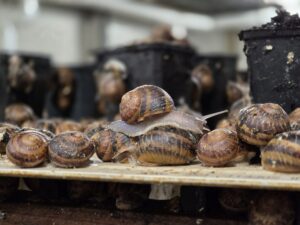
In collaboration with Eimur, a group of farmers from Northern Iceland travelled to visit Peter in Ireland and experience first-hand what snail farming is all about. Did you know that when 40,000 snails are eating it sounds like Rice Krispies crackling in milk? The farmers also got to see how snail eggs are collected and how adorable and surprisingly fast little snails are just after hatching or as insiders say, morphing.
Icelandic snails
In rural areas where substantial amounts of warm water is currently being wasted in district heating systems, people are trying to find innovative ways to utilise this untapped energy. Sigurður Líndal Þórisson of Eimur explored such options and found that snails could be a fantastic opportunity. Snail farming would offer a most welcome opportunity to diversify the income streams of rural farmers, providing a much-needed support to this challenging lifestyle. Soon, old mink farms and unused barns might house the quietest of farm animals.
Cooking up snails
Snails can be eaten in various ways, but they should always be cooked. One can simmer them in their shells in a fragrant sauce and serve them just like in Pretty Woman. They are also great in soups and stews, or battered and fried. But not every snail is destined for the human table, as some might end up in your pet lizard’s tummy. So I ask you… when the first snails in Iceland are cooked up, will you be brave enough to try one? [...]Read more...
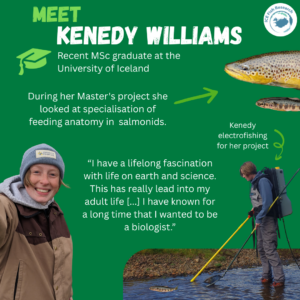
February 25, 2026From very early on Kenedy Williams knew what she wanted to be when she grew up, a biologist. Since she was little she spent her time exploring life outside and fishing for Pacific salmon with her dad. Not only that, she read biology books, did at home science kits and watched nature documentaries. With this life long fascination with life on Earth it is no surprise she eventually started a MSc in biology. She had to move across the Atlantic Ocean to do so. From the United States to Iceland, “an introvert’s paradise”, as she calls it.
Kenedy as a young girl with the Pacific salmon she caught with her dad.
Looking at teeth and jaw bones of salmonid fishes
And now she has finished her MSc from the University of Iceland! Last month Kenedy successfully defended her master’s thesis. For the last two years she studied the craniofacial adaptations of salmonid fishes. She looked at the jaws and teeth of different salmonid populations to see if they are different from each other depending on what the fish are eating.
Left: Kenedy with her supervisor Guðbjörg Ósk Jónsdottir (left) and labmate Ruhila Goswami (right). Right: one of the brown trout that Kenedy caught for her MSc project.
Her Master’s project included a variety of work, to get the teeth and jaws for her project she did fieldwork (which she loved) to catch fish using electrofishing. Labwork involved boiling fish heads and extracting teeth and bones. And lastly, she did computer work to put landmarks on photographs of fish bones. She mentions it being her least favourite part because she had to spend “hours burning my eyeballs looking at a computer screen”. Luckily afterwards she could analyse her data. She mentions: “I really like analysing data, and being able to pick out the patterns in your results. I find it to be very satisfying to get results after all your hard work, and statistics can be weirdly fun sometimes.”
Note: landmarking bones on photographs is done by putting dots on specific areas of the bones. These dots have x and y coordinates and by comparing the x and y coordinates of each bone to other bones it is possible to detect changes in shape.
Left: learn more about electrofishing (made by Guðbjörg Ósk Jónsdóttir). Right: Kenedy electrofishing for small fish.
This love for biology also shines through in her personal interests. Kenedy enjoys being outside, hiking with her dog, and camping. Even fish aren’t safe from her during her free time as she likes fishing and exploring tide pools. But even the biggest outdoor lovers need a chill day sometimes and she will spend time inside crafting and watching tv.
Kenedy Williams
You are never too young to do research
We ask every recent graduate about their tips and tricks on how to get involved with research. Kenedy emphasises that no one is too young to do research and to get involved with local labs and aquariums. She says: “Always send the email, introduce yourself, ask about internships. Ask to shadow, research the logistics of the job (salary, education, etc), and find what feels best for you.” Kenedy got her MSc opportunity by doing exactly that, reaching out by email and introducing herself. “You never get the things you don’t try for!”
Currently, Kenedy is still working for the lab group she did her MSc with, as well as, helping out with classes as a teaching assistant. She hopes to be able to stay in Iceland and find a job or PhD position. One thing she is sure of: “I will definitely still be a scientist in 5 years.” [...]Read more...
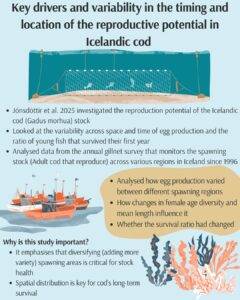
November 28, 2025This past summer, Ingibjörg G. Jónsdóttir at the Marine and Freshwater Research Institute, along with her co-authors Jón Sólmundsson, Peter J. Wright, William Butler, and Pamela Woods, published a paper in the ICES Journal of Marine Science. The study, titled ‘Key drivers and spatio-temporal variation in the reproductive potential of Icelandic cod’, investigates the roles of total egg production and first year survival ratio (how many one year old cod out of a group survive).
To investigate this, data from an annual gillnet survey that has monitored the Icelandic spawning stock (Adult cod that reproduce) across various regions since 1996 were used to assess the reproductive potential of the stock by examining location- and time-variability in egg production and the survival ratio during the first year. Specifically, the study analysed how egg production varied between different spawning regions, how changes in female age diversity and mean length influenced it, and whether the survival ratio had changed.
Figure represents sampling location during the annual gillnet survey. The colours define the Atlantic cod spawning regions.
What are the main findings?
The main findings show a general increase in total egg production, which mirrors the rise in spawning stock biomass. This increase in egg production was most pronounced in Breiðafjörður and Faxaflói. At the same time, a decrease was observed in the slope east of Vestmannaeyjar, where the number of spawning cod has declined substantially. However, the survival of the cod in their first year has decreased, especially since 2010. This suggests that even though more eggs are produced, a lower proportion survives. It is unclear what causes this, but it may result from increased density-dependent mortality (a higher number of deaths due to how crowded the population is). It is interesting to the public because it indicates that having more parents (a larger stock) does not automatically mean more offspring survive to adulthood.
Figure represents: (A) The number of 1-year-old cod found during the yearly groundfish survey in March. (B) The survival ratio, which is the number of 1-year-old cod in March divided by TEP. (C) How TEP is related to the number of 1-year-old cod. (D) How is TEP related to the survival ratio? The horizontal lines in panels (A) and (B) show the average values. The numbers in panels (C) and (D) show the year of each group.
Who should read this research?
This research is important for a variety of audiences. Fisheries managers and policymakers can use these findings to understand the complex factors affecting cod stock. For the scientific community, the research provides valuable insight for marine biologists and ecologists interested in population dynamics and the effects of density dependence. This paper can also serve as a useful case study for students learning key concepts in fisheries science. Finally, the research is relevant to the general public, especially those interested in fishing and the marine environment.
What could future follow-up studies look like?
Future studies could investigate the specific causes of the increased mortality, such as competition for food or increased predation in areas with high densities of young cod. Researchers might also examine how ocean currents may be carrying eggs and larvae from high-production areas to less favourable environments. Additionally, more complex models could be used to predict how the stock will behave under different environmental conditions and management scenarios.
Why is it important that this research was carried out, and is there value in this research beyond academia?
This research is important because it highlights that long-term health depends on a resilient stock structure and variable spawning areas, which are crucial for ensuring successful recruitment. It provides a critical tool for sustainable fisheries management by identifying that the distribution of spawning effort across different regions and the resulting egg production are important for recruitment. This understanding helps to ensure the long-term health and productivity of the cod stock, which is vital for the Icelandic economy.
Link to paper: https://academic.oup.com/icesjms/article/82/7/fsaf128/8213717 [...]Read more...
November 13, 2025Bottom trawling is harmful to life on the ocean floor. Many people agree with this. But we still need to learn more about how and why it causes damage.
Mason Kenny wanted to better understand the impact of bottom trawling gear on the seafloor. During his Master’s in Environmental and Natural Resources at The University of Iceland he dived into this.
He worked together with the Marine and Freshwater Research Institute (Hafró). There he got help from Pamela Woods, Haraldur Einarsson, and Sveinn Agnarsson. They gave the opportunity to participate in the Optigear project. Through this project he got to investigate the interaction between fishing gear and the seafloor.
What is bottom trawling?
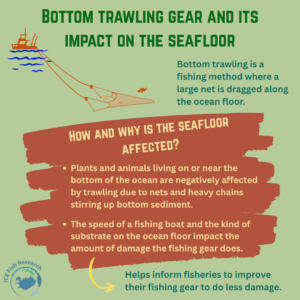
Bottom trawling is a fishing method where large nets, held open by heavy metal doors and weighted with chains, are dragged directly across the seafloor to catch bottom-dwelling fish (see figure below).
Studies have shown that this fishing practice has a major negative effect on plants and animals living near and on the bottom of the ocean. Bottom trawling stirs up sediment (solid material at the bottom of the ocean) by dragging big nets and heavy chains along the bottom and destroys the natural seafloor habitat. For example, it tears up plant roots and collapses animal burrows (tunnel or holes that animals dig to hide in). Sediment will start floating in the water which will block light from the plants on the ocean floor which is needed for them to grow.
Left: Bottom trawl. Credit: NOAA. Right: The chains of the vessel that are dragged with the net over the ocean floor.
Impact on the seafloor depended on ship’s speed and sediment type
Mason focussed on real-world vessel specific trawling data. This data included, for example, the distance between the bottom trawling net and the sea floor. As well as the tension on the wires that connect the net to the boat. This can give information on how the gear interacts with the seafloor and how the bottom substrate affects bottom trawling.
First, he mapped and classified the sediment on the ocean floor. He did this using grab samples, which is a sample of sediment at a specific location. He categorised the sediment classes into average grain sizes. Then he built a new substrate map for the Icelandic waters (see below). This is helpful for future research to be more precise when looking into the interactions of the trawling gear with the seafloor.
A map of Iceland that shows the different substrates (coloured areas) and the location of the grab samples. Sediment classification is indicated by colour.
He then looked at how different aspects of bottom trawling affected the gear and how that impacts the seafloor. He found that the speed of the fishing boat has an impact on tension imbalance of the trawling net. This imbalance will have a negative impact on the seafloor. His findings showed that a speed below 4.6 km/h resulted in the highest instability, while at a speed above 6.4 km/h it stabilised. So, a slower boat does more damage.
He also found that the kind of substrate on the seafloor affected the imbalance. Coarser substrate (bigger than 10 mm) decreased the imbalance by 22%. This is because these types of sediment give greater resistance to the net and make the gear more stable.
Bottom trawling has more impact than we expected
Mason’s results also show that bottom trawling can be a hidden driver of ocean carbon release that is stored in seafloor sediment. Our oceans are the largest natural carbon sink on the planet, absorbing and storing more carbon than any other system on Earth. As mentioned before, the dragging of heavy nets, doors, and chains along the seabed stirs up the sediments which will start floating in the water. With this sediment the carbon gets released as well. And as you might know, carbon release is a major driver of climate change. This figure below shows how bottom trawling disturbs the seafloor and releases carbon (CO2) into the ocean:
This research is important as it can help to inform fisheries on how to improve their gear design, so unnecessary seabed damage can be avoided. Bottom trawling is one of the most widespread human disturbances on the seafloor but there is not a lot of research that have put this disturbance into numbers. This study is a first step to show fisheries and policy makers how we can begin to lessen trawling’s impact.
Looking into the future
This research was a big undertaking but there is so much more that can be done. Mason looked into data from a certain type of ship, so this work can be widened to other types of ships and their gear to see how they impact the seafloor. Furthermore, to really see how the fish are impacted this study can be synchronised with Afladagbók catch logs that can link the bottom trawling gear with biological outcomes.
This study that Mason Kenny set out to do is part of a bigger project, the Optigear project. This project sets out to increase efficiency in trawling fisheries. It is a project funded under European Union’s Horizon 2020 research and innovation programme MarineGuardian (Grant agreement ID: 101212608). [...]Read more...
November 7, 2025If you ask Kolbeinn what drives him as a scientist, he’ll tell you it’s curiosity and exploration. Those two words weave through everything he does — from his fascination with marine life to his love of art, music, and nature. Currently pursuing his master’s studies at the University of Iceland, Kolbeinn is diving into the world of Atlantic cod (Gadus morhua). His research focuses on the depth distribution, age, and growth of 0-group (juvenile) Atlantic cod following benthic settlement in Seyðisfjörður, Iceland. It’s an important stage in the cod’s life, one that helps scientists better understand early survival and habitat use — key pieces of the puzzle in marine ecology and fisheries management.
Photos feature Kolbeinn collecting juvenile cod from beach seine tows for data sampling
The Scientist Behind the Research
When asked what he wanted to be growing up, Kolbeinn replied:
“Something creative but something in nature as well — maybe a shaman or a witch.”
That mix of creativity and connection to the natural world has clearly stayed with him. He says curiosity and exploration are still his greatest sources of motivation, and he’s drawn to biology because it lets him explore both the mystery and the mechanics of life.
Favourite Fish
Kolbeinn couldn’t choose just one — and honestly, we don’t blame him.
“Either Lumpfish (Cyclopterus lumpus) or Whale shark (Rhincodon typus), mostly because they are both very cute.” That appreciation for marine life carries through to his work and his outlook on nature. He admits to preferring marine ecosystems “slightly more than freshwater because it is bigger and feels more primordial.”
Photo features Kolbeinn holding a female lumpfish caught from a fyke net
Either / Or: Quickfire Round
Freshwater or marine? Marine — it’s vast and ancient.
Fieldwork or labwork? Both! Especially when part of the same project — he loves seeing the full process from start to finish.
Coffee or tea? Tea — preferably herbal, since caffeine hardly affects him at all.
Summer or winter? Winter person at heart, though he appreciates the seasonal change.
Big international or small national conferences? Small national ones — a great chance to hear about friends’ projects and exchange ideas.
The Joys (and Challenges) of Research Life
For Kolbeinn, one of the best parts of being a scientist is the community:
“People driven by curiosity and exploration, and the willingness to work together and learn.”
He’s only recently begun his master’s degree, but already feels “more fully immersed into the scientific community and lifestyle — more than it just feeling like school.” That sense of belonging and shared curiosity is what keeps him motivated.Of course, there are challenges too….
“Just not finding the time to do everything that I would want, but that’s usually what I say about anything I’m interested in.”
Advice for Future Scientists
Kolbeinn’s advice to aspiring scientists is simple and heartfelt:
“Be curious and follow your passions. I, for instance, watch a lot of biology documentaries and YouTube videos in my downtime — that helps.”
He also encourages students to step outside their comfort zones: “Try to take the extra step of talking to other people and be social. Your fellow students are somehow both incredibly interesting and very interested in what you have to say, which is great.”
Photo features Kolbeinn assisting with other projects at the University of Iceland, Research Centre of the Westfjords
Beyond the Lab
When he’s not thinking about cod, Kolbeinn channels his curiosity into creativity. He loves writing, music, drawing, and cooking, and finds that his passion for biology actually fuels those creative outlets — and vice versa. [...]Read more...
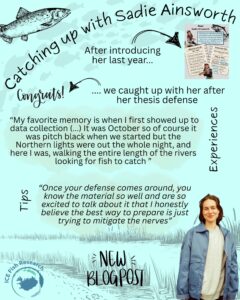
October 31, 2025Last year we introduced you to Sadie Ainsworth, her favourite fish (Westslope cutthroat trout), and her journey from growing up in Canada with a supercool hello kitty phone to studying her master’s in the Icelandic Westfjords. Back then, Sadie had just started her thesis looking at salmon in Iceland (https://icefishresearch.com/saidie-ainsworth-from-hello-kitty-to-iceland/). A lot has happened since then and we are happy to announce that Saidie successfully defended her thesis in September. We now had a chance to catch up with her and find out how her thesis experience was from beginning to defense.
How was the experience with your master thesis?
“As I type this question, I’m smiling a bit because if you were to have asked me this question while working on this thesis, my answer would have been drastically different depending on the day and time you asked me. But now that I am done, all I can say is amazing!”
Did the thesis/project turn out how you first imagined it in your thesis proposal?
“When I first started the project, I didn’t really know what to expect. I had never done any genetic work previously. And when my advisor first sent me papers we were going to base the thesis off of, I remember having to reread the papers over and over again to even understand what they were doing. This led to a rather big learning curve when first starting my project which in a way was great since I was still figuring out what would be possible to complete in my timeframe. With that said, after getting more into the project, my ambitions quickly exceeded what was feasible.”
What were the main results of your thesis? And what were the steps to get there (i.e. fieldwork, labwork etc.)
“The main objective of the thesis was to get a baseline of the genetic predisposition of the maturation timing in wild Atlantic salmon by genotyping two major effect loci. In order to do this, I needed finclip samples, which I was able to get by participating in fieldwork in addition to accessing samples archived from the Icelandic research company Lakfiskar. After fieldwork was complete, it was time for the labwork, where the DNA was extracted and analyzed.”
In our last post, you mentioned that besides fish & science, your favourite things are going for bike rides with friends and enjoying some self-made sandwiches while soaking in a good hot pot. Did you still find time for these things next to your thesis?
“Lets just say, next summer is going to be really really fun since I have double the bikerides, soaks, and sandwiches to eat.”
Is there something that you would have liked to know before starting your thesis? Do you have some recommendations for future master students?
“The biggest challenge that I faced when working on my thesis was when it came to the data analysis portion. This has never been my strength, so I wasn’t surprised when I struggled with the analysis but I was taken aback by how much my frustration got in the way of motivating me to consistently work on the thesis. My recommendation would be to form a group of other students to work on your thesis. That way you are held accountable to work and can ask each other questions. I think I would have really benefited from having consistent peer motivation.”
How did you prepare and experience your thesis defense?
“Once your defense comes around, you know the material so well and are so excited to talk about it that I honestly believe the best way to prepare is just trying to mitigate the nerves. For this, the best thing I think you can do is practice in front of your friends and ask them if your presentation makes sense to someone who has never heard your research before. And then make sure to drink your coffee with them the morning of your presentation, so you’re not just a nervous wreck alone!”
What does your life post-defense look like and what are your next steps?
“Right now, I am living and working in Ísafjörður. Currently, I am taking the time to appreciate a schedule where I am not balancing work and school. I am not sure what’s next, but I have been keeping my eye out for opportunities to continue working in fisheries.”
What is your favourite memory of your thesis project?
“My favorite memory is when I first showed up to data collection, I had driven from Ísafjörður to Selárdalur, arriving at around 8:00 pm coming from my closing shift at heimabyggð. I’m pretty sure I ate a cinnamon roll for dinner. When I arrived at the house, everyone said “Are you ready?”. And I was like yes of course! But what I didn’t realize was that we were starting sampling at midnight and would be finishing early the next morning. It was October so of course it was pitch black when we started but the Northern lights were out the whole night, and here I was, walking the entire length of the rivers looking for fish to catch with two people I had just met. I just loved the whole thing!”
As you can see, doing a master’s thesis is often not a straightforward process. It can come with steep learning curves and frustrating moments of trying to analyse your data, but it will also allow you to explore exciting topics and learn new tools and approaches. Doing research and writing a thesis can be a rollercoaster of emotions between stressing about deadlines and the beauty of small moments and big achievements. If you ask Sadie, it is important to keep your friends close during your thesis, both for the motivation and support to keep on working but also to help you calm those nerves before the big day of your thesis defense.
We would like to congratulate Sadie again on defending her thesis on an exciting research project! We wish her all the best for the next steps and can’t wait where her path will lead her!
If you have more questions about the process of doing a thesis or if you want to hear more tips and tricks, let us know! [...]Read more...
October 8, 2025As I’m writing this, it is the last week of my five and a half weeks stay at the Benedikt Hallgrímson lab (https://hallgrimssonlab.ca/) at the University of Calgary in Alberta Canada. They specialize in genetic morphometric analysis exploring complex traits in zebrafish, mice, and humans. However, I’m here to micro-CT scan some Arctic charrs.
Maybe some of you have seen a CT scanner in person, or just in the movies. These huge machines that look a little bit like doughnuts that take up an entire room. Micro-CT scanners are a bit different, for starters they are smaller and often are just big boxes instead of having that doughnut shape.
Picture of the micro-CT scanner I was using. It’s a big machine but not as big as the scanner they have in the hospitals
How I scan the fish
Micro-CT scanning fish has been an interesting process. Here I will briefly go over my work protocol. The first step is to put the fish in a chemical solution. We must do this so the fish will be stiff during the scanning itself. Fish generally have to stay in the solution for around a week before they are ready to scan. This chemical solution is made with formalin, which is a dangerous chemical, therefore whenever I was working, I had to wear a lab coat, gloves and mask for safety.
When working with dangerous chemicals it’s extremely important to protect yourself
The scanner I was using came with a sample holder where I had to put the fish in. However, no part of the fish was allowed to touch the sample holder directly. I had to wrap up the fish in foamed plastics, so they ended up looking like little fish burritos. After this I put the fish in the holder, then placed the holder in the scanner. Made sure all the settings were correct and then it was ready for scanning.
My little “fish burritos” are then placed in the sample holder. After which the sample holders are placed in the scanner
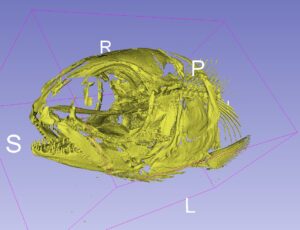
As I needed to have very good resolution on my scans they needed to run for a long time. My longest scans were around three hours, for just one fish. Thankfully, the scanner I was using allows you to scan in batches, so I could prepare multiple fish which could then be scanned over the night while I was sleeping. Once all of this was over, I ended up with some super cool scans of the fish heads. I will then use these scans to study how the shape differences (in 3D) between Arctic charr morphs and age classes.
Over my five and a half weeks I scanned over 80 fish
The final product are these lovely 3D scans of the Arctic charr skull
Important to take breaks
Even though I came to Calgary to work. Having a healthy work life balance is very important. One of the important things during research visits is to meet other researchers and see how other labs (and Universities) do their research. But it is also important to be a bit of a tourist and explore the city/country you are visiting. For example, going to museums or hiking around in the natural parks around the area.
Image on left: Skull of a Dunkleosteus, at the Royal Tyrrell Museum. Image on left: Rawson Lake in Kananaskis Country [...]Read more...
September 19, 2025
What are fish nursery grounds?
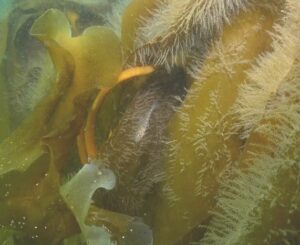
Nursery grounds are places where young fish find food, favourable temperature and protection from predators during their early life stages. Different species of fish, including Atlantic cod (Gadus morhua) and saithe (Pollachius virens) juveniles, settle in nearshore areas at different times and depths, depending for example on the timing of spawning and oceanographic conditions. These nursery areas are important for helping young fish survive and grow so they can support future fish stocks.
What is the study about?
The study focused on the shallow coastal waters in the fjords of northwest Iceland. These areas have a variety of habitats, from gravel beaches to rocky and algae-covered zones. Traditionally, scientists have used beach seines—long nets pulled in from the shore—to catch small fish and measure their numbers. While useful, this method cannot cover areas that are deeper or very rocky. In this study, the researchers combined beach seining with scuba diving surveys. Divers swam along set paths underwater and counted the number of young cod and saithe they saw at different depths. This approach provided a clearer picture of where fish were living and how those patterns evolved throughout the summer.
What did they find?
Overall, the researchers observed clear differences in timing and depth use between cod and saithe.
Saithe settled earlier in the summer. They were most common in shallow spots, especially where algae grew close to the shore. As the summer progressed, their numbers in these areas decreased.
Cod settled later than saithe, but they stayed in shallow areas longer. They were seen both in dives and caught with beach seines in late summer, suggesting that cod rely on these nurseries for a longer time. Cod were also found across a wider depth range, although most stayed in waters shallower than 10 meters.
The study also showed that young cod often appeared in bigger groups earlier in the summer and later were seen as more scattered individuals. This change may reflect a shift in behavior from shoaling to more solitary living as they grow.
Importantly, both beach seining and diving revealed that during the study period, only cod and saithe utilized these shallow fjord nursery areas—no other closely related species were found.
Why is this important?
This research helps explain how two important commercial fish species utilize Iceland’s shallow waters during their early life stages. Cod and saithe are vital for Iceland’s fishing industry and local ecosystems. Understanding when and where these juvenile fish settle provides knowledge that can be used to manage fish stocks and protect key habitats.
Because beach seine nets are not effective in all places, dive surveys added new insights. For example, divers could record fish in rocky and algae-rich habitats where nets would not work. This filled a knowledge gap beyond what standard surveys usually capture.
Protecting nursery grounds is essential because survival at this stage significantly influences the number of fish that will reach adulthood and become part of the population that supports fishing.
What future research can be done?
While this study filled some important gaps, more work remains. Future studies could:
Use genetic tools to separate different ecotypes of cod, since it is known that some live closer to shore while others are further offshore.
Track changes over more years to see how climate and water temperature affect settlement patterns.
Combine dive surveys with new tracking technology for a fuller picture of how small fish move.
By building on this work, scientists can better predict how young cod and saithe survive in their first year of life and how healthy populations for the future can be supported.
Access full scientific article here: https://doi.org/10.1002/ece3.71674
[...]Read more...
August 22, 2025What swims between the algae of the rocky intertidal zone?
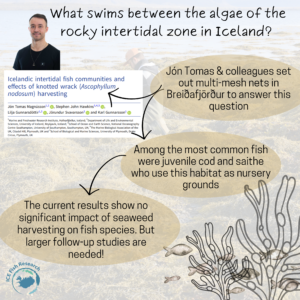
You can find a very lively ecosystem in the rocky intertidal zones along Iceland‘s coastlines. One highly abundant species using this habitat is the brown algae Ascophyllum nodosum, also commonly known as knotted wrack in English and Klóþang in Icelandic. This species is harvested for multiple purposes such as food or fertilizers. But what can we find swimming between the algae and are there differences between harvested and unharvested areas? This is a question Jón Tomas Magnússon and colleagues have addressed.
But first things first, what do we mean by rocky intertidal zones? Generally, the intertidal zone lies between the lowest point the water edge reaches during low tide, and the highest one during high tide. Species in this habitat have to adapt to rapidly changing environments throughout the tidal cycles where they can go from fully under water to mostly dry. But this habitat can also serve as important area for juvenile fish who use it as nursery grounds, seeking shelter in rockpools, between rocks, or underneath algae.
In their recently published study “Icelandic intertidal fish communities and effects of knotted wrack (Ascophyllum nodosum) harvesting”, Jón and colleagues placed multi-mesh nets in the rocky intertidal area of Breiðafjörður for full tidal cycles to document what fish are caught moving into or out of the intertidal. They first set up this system in June 2019 before the harvest and then repeated it once per season until June 2020. The collected information on what species are present.
Among the fish species that they caught in the nets were the commercially highly important cod (Gadus morhua) and saithe (Pollachius virens) who use the rocky intertidal as nursery and feeding grounds. While the results currently show no significant impact of the harvesting activities on the observed fish, the authors point out that this was a very small-scale study. Knowing how our activities, in this case the harvesting of knotted wrack, can impact commercially important species especially in their most vulnerable juvenile stages is crucial. Jón Tomas hopes that future studies will follow that will continue to monitor the potential impacts on the fish in the rocky intertidal zone across a bigger region as well as over multiple years.
If you are interested to read more, especially when you are curious about the impacts of seaweed harvesting and the ecology of intertidal fish, find out more here.
[...]Read more...
August 5, 2025
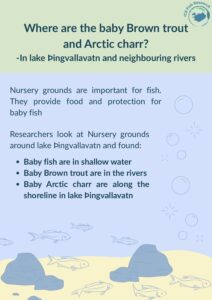
Nursery grounds are habitats mainly used by juvenile (baby) fish. As the name suggests these habitats are like nurseries for fish. Nursery grounds are very important for the fish species using them. Since they provide protection and food for the young. Therefore, knowing where they are and how they are holding up is important. If a nursery ground is destroyed or not usable anymore that would be terrible for the fishes using them.
The the search begins
Last year researchers from the University of Iceland and the Marine and Freshwater Institute published a paper in the Icelandic journal Náttúrufræðingurinn. In that paper they looked at nursery grounds of Brown trout and Arctic charr in lake Þingvallavatn and neighbouring rivers.
They used two datasets in the paper. One dataset was collected by researchers at the Marine and Freshwater Institute. They did regular surveys on trout and charr nursery grounds in lake Þingvallavatn and neighbouring rivers from 2000 to 2021. The other dataset was collected during the summer of 2022, by researchers at the University of Iceland.
The data was collected using electrofishing. A fishing technique using electricity to shock the fish and then catch it with a net. Electrofishing does not kill or harm the fish. So, a researcher can catch a fish, measure it and then set it free.
And what did they find?
The results showed that the two species use different nursery grounds. Brown trout mainly uses the shallows of the rivers. Which is expected since trout mainly spawn in the rivers. On the other hand, Arctic charr juveniles were mainly found in shallow waters along the shoreline of lake Þingvallavatn. Often close to known charr spawning sites. Adult trout and charr are found in deeper water.
During the early 2000s Brown trout fry were released into the lake. This was to increase the population size. Which was very low at that time. According to this study the releases appeared to have work. The amount of juvenile trout has increased in the last 20 years. However, Arctic charr numbers have stayed the same (neither increasing nor decreasing). The researchers also looked at the differences between habitats. They found that it was more likely to find fish if the shoreline had vegetation on it.
Anyone interested to know more can access the article here: https://natturufraedingurinn.is/uppeldissvaedi-laxfiska-i-thingvallavatni-og-tengdum-am/
The article is in Icelandic. However, a short abstract as well as figure and table text are provided in English. [...]Read more...
June 12, 2025
This week, we’re excited to introduce Einar Pétur Jónsson, a PhD candidate and fish researcher at the Marine and Freshwater Research Institute (MFRI). Einar is passionate about marine biology and has a deep curiosity for how life responds to environmental change.
Meet Einar
Einar’s favorite fish is the spotted wolffish, and when asked to choose between the lab and the field, his answer is enthusiastic: fieldwork! He prefers tea over coffee, and when it comes to seasons, he enjoys whichever one shows up with full force. As for conferences, Einar favors national ones—they throw the best parties.
What Does He Study?
Einar’s research focuses on how organisms respond to environmental changes. “Right now,” he says, “we are doing experiments to see how capelin responds to a warming ocean.” It’s a topic that’s not only timely, but also crucial to understanding the future of marine ecosystems.
Inspiration & Motivation
What inspired Einar to pursue science? “Teachers, colleagues, circumstances, and the effects we are having on our environment.” He knew from a young age that he wanted to be a biologist and a football player. Science eventually won, and he hasn’t looked back.
The best part of being a scientist? “To be able to direct my attention on the interesting parts of our world and try to steer as close to the truth as possible.”
Advice for Students
Einar has a mantra for anyone thinking of going into science—or any challenging pursuit:“Keep it fun, nurture your interest, and read lots.”
This advice has carried him through his studies, including his favorite part of the PhD—diving for sea urchins—and the less exciting parts like paperwork and email.
What’s Next?
Looking ahead, Einar hopes to continue doing what he loves: staying curious, exploring the world, and sharing what he learns. [...]Read more...
June 6, 2025
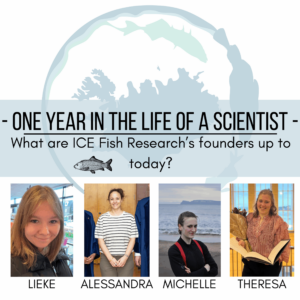
Last week we shared ICE Fish research’s first anniversary. 1 year of sharing exciting fish research & fun facts with you, diving deeper into the person “behind” the scientist, & coming up with many more ideas for this science communication platform. A lot can happen in one year. But what can one year mean for a scientist?
In the spring of 2024, Alessandra, Lieke, Michelle, and Theresa got to take part in a science communication workshop led by Anaïs Remili and organised by VistIs where the idea of ICE fish research initially sparked. Throughout the last year you got some glimpses into our personal academic journeys, but let’s check, what has happened over the past 12 months?
Theresa:
It has been a busy 12 months for Theresa. After five years in the making, she submitted her PhD thesis on European flounder in Iceland in October and successfully defended it in January. Three of her four PhD chapters have already been published (we introduced 2 of them on ICE Fish Research see here & here). Between finalising her PhD thesis throughout the summer of 2024, she was busy packing up her life and saying many goodbyes as a new adventure was waiting around the corner. In September she exchanged life in northwest Iceland for living at the Mediterranean Sea in southern Spain, having to adjust from wearing multiple layers on a day-to-day basis to learning the value of 50+ sunscreen. Leaving the flounder research behind (for now), she joined the IRIS lab at the Estación Experimental de Zónas Aridas (CSIC) in Almería, where she continues her work in invasion science. Besides wrapping up her PhD and starting her postdoc position in Spain, she also attended the Neobiota conference in Lisbon, Portugal in September, co-lead the Nordic symposium for biodiversity across the natural and social sciences in Trondheim, Norway in October and attended workshops in invasion culturomics and social dimensions of naturalised alien flora (SoNAF) in Pruhonice, Czech Republic in February.
Alessandra:
Much has happened in the past year for Alessandra. In October 2024 Alessandra was part of a unique networking opportunity upon the RRS Sir David Attenborough, where she gained first hand insight into the workings on a state of the art research vessel fit to sail the polar oceans. After submitting her PhD thesis in February, she then presented her work and represented ICE Fish Research at the national OIKOS conference in Finland. Alessandra then took a one month vacation in India to recharge her batteries for her defence which she passed with flying colours this past May. Currently she is working on publishing the manuscripts from her PhD thesis as well as applying for funding to continue her research in Iceland. In the coming months Alessandra will focus on producing the new ICE Fish Research podcast for which she will sit down with fish researchers across the country.
Lieke:
Since the beginning of ICE Fish Research, Lieke has been busy working on her PhD. She is writing her second and third chapters which involve acoustic telemetry (read more about it here!). This is a new area for her, so a lot of the time she has been learning how to work with this data, and results are slowly coming in. Very exciting! Furthermore, in the autumn of 2024 she was teaching a cartography class for bachelor and master students at the University of Iceland. This year is looking a little different but much was accomplished. At the beginning of 2025, she was awarded a PhD grant from Rannís as an extension for her PhD as well as a grant from Reykjavík Energy to study the impact of Nesjavellir waste water on Arctic charr behaviour. This, however, has to wait a bit, as earlier this year her daughter was born and she is currently on maternity leave. She is looking forward to working on her projects again starting in mid September but for now will enjoy all the baby cuddles!
Michelle:
Michelle completed her fieldwork last summer and is now in the process of compiling her papers for her PhD. In addition to her main research, she submitted two side project papers—one of which is under peer review and is based on an interdisciplinary workshop called Cod Construction and Communities while the other has been accepted for publication and includes dive survey data from her Masters Thesis. Last year, she traveled to South Africa to attend an international conference and volunteered at the South African Shark Conservation Academy (SASC). Earlier this year, she began preliminary fieldwork for her postdoctoral research on Atlantic cod as part of the CodSpa Nordforsk project grant (find out more here). Currently, she is finishing up her first PhD manuscript and is looking forward to presenting her findings at an international conference later this month in Tokyo, Japan. [...]Read more...
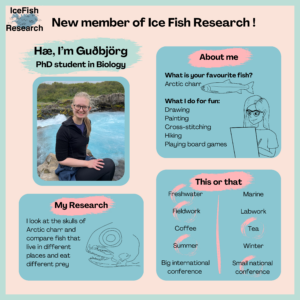
April 4, 2025Hello, my name is Guðbjörg and I’m a new member of Ice Fish Research. I was born and raised in Iceland. Currently I’m working on my PhD in Biology at the University of Iceland where I research diversity in Arctic charr.
Wait, doesn’t everyone love natural science?
I was never going to be a biologist. As a kid I wanted to be a teacher, occupational therapist or an actress that also directed movies and wrote novels in her spare time.
I have always had a great interest in nature and I’m very curious. Biology was always my favourite subject in school, I collected dinosaur books, haunted for bugs and sticklebacks and loved watching nature documentaries. I just never put two and two together, that I may want to be a scientist.
Then one day in menntaskóli (Icelandic high school) when I was stressing over the fact that I had no idea what to do after graduation. I was informed that I was the only one of my classmates that found biology fun. That’s when I finally put two and two together. As a result, I applied for the undergraduate program in biology and have not looked back since.
My Research
I started working with the Arctic charr five years ago when I started my masters project. Where I examined differences in the shape of skull bones between Arctic charr morphs in Þingvallavatn. Many questions arose during that project which later became my PhD project.
I wanted to explore further the great diversity within the Arctic charr. To see how populations have adapted to their environments. Which populations are the closest to the ancestor and which are most different? Right now, I’m researching diversity between (and within) Icelandic Arctic charr morphs. Focusing on the shape of skull bones and number of teeth. I should have all my samples, now it’s just analysing them.
About me
When I’m not working, I like creating art whether it’s painting, drawing, writing or cross stitching (all good for mindfulness). I also enjoy hiking and other outdoor activities. Finally, I like hanging out with friends (especially if board games are involved).
Ice Fish Research
I have always found that science communication is very important. So, I was very proud of Alessandra, Lieke, Michelle and Theresa when they founded Ice Fish Research about a year ago. Now I am so thankful and feel honoured that they invited me to be a part of this initiative. Thank you.
Learn more about me
What is your favourite fish? Arctic charr
What is your research topic? Parallel evolution, plasticity and developmental origins of adaptive craniofacial traits in Arctic charr.
Where do you work? The University of Iceland, Reykjavík, Iceland
What inspired your research? I’m honestly just very intrigued by evolutionary processes, how biodiversity arises and how organisms adapted. The Arctic charr just happens to be a good species for these types of questions.
What is your favorite part of being a scientist? This is a bit of a hard question. There are so many fun parts of being a scientist. I’m a pretty curious person and have always liked solving difficult problems. After all the work of collecting the samples, measuring them and doing all the calculations you finally have an answer. Normally the answer isn’t even that striking, there is just something so fun about this “eureka” moment.
How would you explain a scientist to a child? Scientists are a bit like a detective, trying to solve or understand the great mysteries of the world.
How would you explain your research to a child? I look at the skulls of Arctic charr and compare fish that live in different places and eat different prey/food.
[...]Read more...
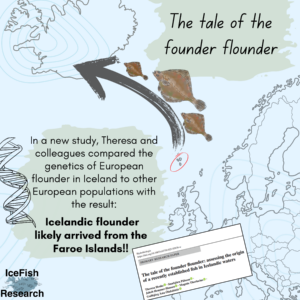
March 14, 2025Have you ever wondered where the flounder found in Iceland has come from?
It is well known that alien European flounder has been officially documented in Icelandic waters in 1999. For a long time, the question remained where the flounder came from. Over the years, people have debated whether the flounder came from the Faroe Islands or from the coasts of western Europe. Now Theresa Henke and colleagues have published a study where they took a closer look at the origin of flounder. To do this, they followed the methods used in a study from 2007 that had shown a genetic difference between flounder in the Faroe Islands and other European populations. In the summers of 2020 and 2021, Theresa collected flounder samples all around Iceland. Comparing them to the data from the earlier study showed: European flounder found in Iceland likely arrived from the Faroe Islands.
One answer and many new questions
This study has answered a big question in the case of flounder in Iceland. But as it often is the case in research, it has also opened up many new ones. Even though we now know where the flounder came from, we still don‘t know how it arrived from the Faroe Islands (400 km from southeast Iceland): Did the flounder swim to Iceland? Was the flounder accidentally brought over to Iceland by boats? And does this even matter?
It does. Right now, European flounder in Iceland is classified as a potentially invasive, alien species in Iceland. The definition of an alien species, according to the recent IPBES report (read more here), is a species that was introduced because of human activity. If the flounder arrived in Iceland by itself without the help of humans,it would not be an alien species based on this definition. There is no definite answer to this question yet, but we hope future research will provide one. Read more about this discussion in the paper!
For now, Theresa and her co-authors suggest to keep the classification with a little addition. By adding the term “polyvectic” the classification points out that there are more than one potential ways how the flounder has arrived and that it is still unsure which one is correct.
What about the hybrids?
This study did not only find out where the flounder came from, it also showed that there are hybrids between flounder and the native European plaice. When, in this case, two different fish species produce an offspring, it is called a hybrid. When flounder and plaice live in the same area, you can often find hybrids, such as in the Baltic Sea. But this is the first time that these hybrids have been officially documented in Iceland.
Read the full study on the tale of the founder flounder here. [...]Read more...
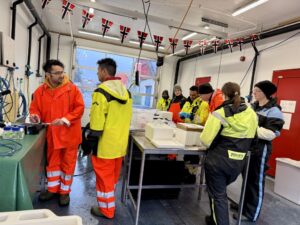
March 6, 2025A new international research project called CODSPA has just begun. The project aims to study how stress affects cod reproduction during spawning season. Researchers from Norway, Iceland, and the Faroe Islands are working together on this important study.
What is CODSPA?
CODSPA stands for Cod Spawning Project. It will run from 2025 to 2028 and is funded by NordForsk, an organization that supports Nordic research cooperation. The project leader is Marco Vindas, and the team includes scientists from various universities and research centers across the Nordic countries. The official website link about the project and participants can be found here: https://www.nmbu.no/en/research/projects/codspa
Why is this research important?
There’s a debate about whether fishing should be limited during cod spawning season to protect the fish population. Different countries have different approaches to this issue. The CODSPA project will help scientists understand if closing certain areas to fishing during spawning season is effective in protecting cod populations.
CODSPA Workshop
Last week, Guðbjörg Ásta Ólafsdóttir and Michelle Valliant from the University of Iceland, Research Centre of the Westfjords, met fellow team members in person at the Marine Research Institute in Austevoll in the west coast of Norway. During the workshop, they learned and practiced with the other members the techniques that will be used to collect samples.
What will the researchers do?
The team will use several methods to study the effect of stress and reproduction in cod:
Collect water samples to study DNA from spawning fish that have been in the area, using a technique called environmental DNA
Take blood and mucus samples from the fish
Gather eggs and sperm from cod
Check the quality of the eggs and sperm
Check the quality of the eggs and sperm
Study cod brain tissue
They’ll use this information to study how stress from fishing activities affects cod spawning, egg fertilization, hatching, and the growth of young cod.
What‘s next?
The first season of data collection will start soon, as wild Atlantic cod in Norway, Iceland, and the Faroe Islands begin their annual spawning this coming spring. The results of this study will help fisheries managers make better decisions about protecting cod populations while supporting sustainable fishing practices.
[...]Read more...
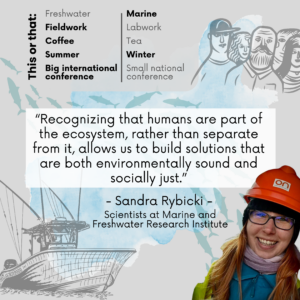
February 13, 2025The human perspective of fisheries – Meet Sandra Rybicki
The human perspective
Can we really understand and protect nature without looking at the role humans play in it? Can we regulate and manage fisheries without knowing how these are shaped by local traditions, what values they hold for local communities, and how people depend on them to provide livelihoods and food security? These are some of the questions that have shaped the research interests of Sandra Rybicki, a scientist at the Marine and Freshwater Research Institute working on the relationships between environmental changes, sustainability, fisheries, and human communities. In her research, she combines ecological data with socio-economic perspectives to explore the effect of climate change and impacts due to human activity on marine and freshwater resources. Her work is driven by interdisciplinary collaboration, the engagement of stakeholders in the research, as well as science communication.
From fields and forest to lakes and oceans
Growing up in a small village in Germany surrounded by fields and forests, Sandra has alwas had a great connection to nature. But the wild and vast character of the oceans, full of unanswered questions took this fascination of nature to another level. This can be seen in her scientific journey, from taking a course on cetaceans (whales, dolphins, and porpoises) that got her initially hooked on the topic to now being based in Iceland where she actively contributes to the development of sustainable solutions that balance conservation, resource management, and cultural resilience in Icelandic fisheries. Additionally, she has been sharing her knowledge and experience as a supervisor and mentor in the GRÓ-FTP program and, in turn, she got to learn from her students about Indonesian and African ecosystems, including lakes, inland aquaculture, and the dynamic connection of small-scale fisheries and sciences in these regions. All of these experiences combined have shaped her perspective that the nature of fisheries research and management goes beyond species and catch numbers and should work for the people who rely on these resources while also protecting the ecosystems that sustain them. Understanding the human perspectives will help us move beyond one-size-fits-all-conservation models and instead help us develop solutions that consider both ecological sustainability and social well-being.
On being a scientist
Sandra truly enjoys being a scientist, especially the parts of the job where she gets to step away from the desk and on board of boats to do some hands-on work. In her opinion, being a scientist is so much more than a lab coat and published papers. Being a scientist means always learning new things, adapting to different situations and working with others, whether this is with other scientists, policy makers, or local communities. Doing research should not just be about collecting data, it should rather be about understanding the bigger picture. She also highlights that a key part of doing science is communication. After all, science is not just done when the research is done, the collected results and insights need to be communicated and made available in an easily understandable way to other scientists, to policy makers, to stakeholder groups as well as the general public.
As an advice for future PhD students, Sandra points out that a PhD is never just about the research and becoming an expert. It is about the skills that you develop along the way, whether that is learning that setbacks and unexpected results are not failures or learning to step back to see the bigger picture. Choose a topic that truly excites you. Passion and curiosity will keep you motivated during the tough moments, and the best work comes when you genuinely enjoy what you’re exploring.
[...]Read more...
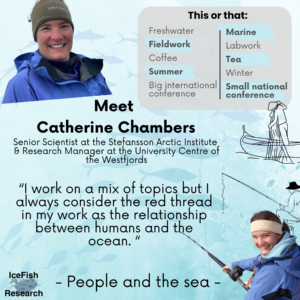
February 7, 2025
Iceland is a country that has a long history deeply interwoven with the ocean ever since the first settlers crossed over from Norway. In many ways, the sea has shaped Iceland’s society as we know it. So when we talk about fish and fisheries in Iceland, we also have to talk about the role humans play. In the words of Nobel prize winning researcher Dr. Elinor Ostrom on fisheries management: we are not managing fish, we are managing people. This connection between people and the sea is also the driving thought of Catherine Chambers, a scientist based in the Westfjords.
The red thread
Catherine is a scientist with a lot of different research interests. She describes her scientific journey as a very twisty and turny one that took her from working on invasive Japanese knotweed during her undergraduate studies in Environmental Science to a brief stop-over in the pharmacy school. Thinking that this new career path would be more promising on the job market and being driven by the idea of helping people, she came to find out that the reality of health care in the US did not match what she was looking for. So she returned to the Environmental Sciences.
In 2008, Catherine ended up in Iceland and started learning about fisheries. Ever since, the relationship between humans and the ocean has been the red thread throughout her scientific work, starting with taking part in a PhD program in Alaska called “Marine Ecosystem Sustainability in the Arctic and Subarctic” where she got to take classes on topics such as Traditional Ecological Knowledge, Oceanography, and Fisheries Economics. This variety can still be seen in her current research interests that range from the management of sustainable resources (fisheries, seaweed mariculture, driftwood) and marine plastics, to fishers’ knowledge of invasive species, youth and ocean literacy, and the social aspects of energy transitions in small-scale fisheries.
By looking at the connection between humans and the sea, we not only collect valuable information that is crucial for conserving the oceans, we also get to learn and understand more about ourselves, about what it means to be human. Catherine hopes that her work will help critically challenge common believes on human nature, why we act in the way we do, and how we should govern ourselves in connection with marine resources.
On being a scientist
To Catherine, the most important and exciting part about being a scientist is asking the questions that make you realise what you don´t know. As a scientist it is important to be humble about the knowledge that we already have and the all the answers that we still need to find. One thing that she wishes she would have already known when she started her PhD is that the amount of work that you are expected to do ever-increases when you stay on the academic path following your PhD. So enjoy the time while you can 🙂
[...]Read more...
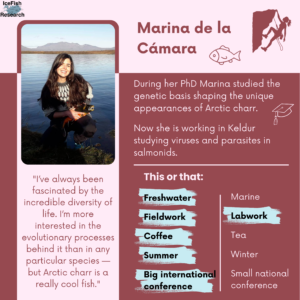
January 16, 2025Today´s spotlight we want to shine on Marina de la Cámara as she is defending her PhD this coming Friday (17.01.2025). A big congratulatory hug from us, you are going to do wonderful!
Growing up Marina had a bit of an identity crisis as a kid. She wanted to be a musician, a writer a teacher and a scientist all at once. Eventually science won (but art is still a big part of her life) and after doing her Masters in Norway she ended up in Iceland to do her PhD. In January 2020 she started her research at the University of Iceland, Faculty of Life and Environmental Sciences. Marina has always been fascinated by the incredible diversity of life and is interested in the evolutionary processes behind it, no matter the study species. But during her PhD where she studied the genetic basis of why the Arctic charr look so different from each other, she fell in love with the Arctic charr.
The highs and lows of a PhD
Just like life, a PhD has its ups and downs. And while it gives a lot of freedom to do the research you want, a lot of students deal with loneliness. She recalls times when deep in research that it was tough to deal with loneliness and isolation. PhD research is oftentimes done alone as it is such a specific topic you are studying and there are few people you can turn to. Furthermore, finding funding opportunities and the challenges that come with publishing in peer-reviewed journals can also be stressful and frustrating. And as many scientists know, reviewer #2 is a bitch and will make you believe that your whole study is crap even if it isn´t so!
But we wouldn’t do a PhD if we didn’t love science and Marina sure does. She loves diving into her results and summarising tables and complicated plots, and giving them biological meaning. Like a puzzle, she connected ideas from very specific questions and came up with answers (and even more questions) to put it in a bigger picture and tell a story.
If you are a prospective graduate student we hope you do not feel too discouraged as research is wonderful but it is good to know the challenges we deal with. Marina wants to give as advice to do what excites you the most. Do not be afraid to try new things or to go off the established academic pathway to see what you are comfortable doing. She knows it is easy to feel overwhelmed and question your place in academia (hello imposter syndrome!). So prioritising your mental health is super important. Make sure to build a strong support network, especially when your family and childhood friends are far away. Surrounding yourself with people who remind you that you matter and that you belong will make all the difference.
Also, find out what you like doing besides research. While being a graduate student and doing research is a big part of you, it is important to be able to unwind afterwards and empty your head of all those research questions! Marina loves to have her feet off the ground, whether it is practising aerial arts or rock climbing. She also enjoys listening to music and spending quality time with friends and family.
Future plans set in motion
While wrapping up the last pieces of her PhD Marina did already start a new chapter. Currently, she is working at The Institute for Experimental Pathology at Keldur where she is studying viruses and parasites in salmonids. But after an intense period in her life doing her PhD she also wants to make sure to take more time for herself and her loved ones and start travelling more. We wish her all the best with these plans!
Find more information on Marina´s PhD defence here. [...]Read more...
December 23, 2024What is the aroma of Christmas? For many Icelanders Christmas smells like a mix of smoked lamb meat, Christmas tree, cookies and a little bit of fermented skate, called Skata. In Iceland Skata is traditionally eaten on the day before Christmas, Þorláksmessa (23. December; celebrating St. Þorlákur). Skata has a very strong smell because of it contains ammonia, so, sometimes people boil another traditional Icelandic Christmas food, smoked lamb meat, after the skate feast, to mix the aromas. Others boil the skate in their garage or even outdoors.
In Iceland two species of skate are fermented. Blue skate, which is the most common, and thorny skate. The thorny skates need to have the skin removed before boiling because of the spines. To ferment the skate the wings are cut off and put into a big container and covered. They are kept in a cold place for about three weeks (depending on the temperature). The fermentation is necessary to break down urea (1) and trimethylamin N-Oxid (2), which are quite toxic. During fermentation bacteria break them down into ammonia, which makes the flesh safe to eat. When the skate is ready it is boiled. We eat it with boiled potatoes, sometimes with boiled turnips and with ryebread with a thick layer of butter.
It is also necessary to have sheep fat with the Skata, either hamsatólg (which is melted sheep fat with tasty brown bits) or if you are from the Westfjords Hnoðmör (which is sheep fat, that was allowed to go mouldy before melting). The two types of fat differ greatly in taste. Also, Skata comes in different strengths and people often want it to be really strong. The strongest Skata is called “gómlosa”, which literary translates to top of the mouth loosener. But, one has to breath out when putting the skate in the mouth, because if you inhale you will get teary eyes.
But why this Christmas tradition? Back in the days Skata was a common food in Iceland, especially in the Westfjords. People there ate Skata at least once a week, so it was a very ordinary food. Now, people wanted to eat something normal before Christmas eve (when Icelanders start celebrating Christmas at six o’clock) to leave space for when all the good food was put on the table. This tradition originated in the Westfjörds but is now celebrated all over Iceland. Commonly, people gather together in big Skata feasts before going for the last Christmas shopping at Þorláksmessa.
(1) Urea (þvagefni) is a waste product of the body when it digests proteins from the food and is a main component of urine.
(2) Trimethylamin N-Oxid (TMAO) is important for protein stability. When fish die bacteria break down TMAO to trimethylamin (TMA), which gives the “fishy” smell.
[...]Read more...

December 13, 2024Marcos Lagunas and his collaborators from the University of Iceland and the Marine and Freshwater Institute teamed up for a project on the genetics of brown trout. Last year, they published an article where they looked into the genetic structure of different trout populations in Thingvallavatn and Ölfusá.
The decline of trout in Thingvallavatn
The number of brown trout in Thingvallavatn heavily declined between 1960 to 1990. Why the trout declined has never been fully known but the building of a dam in 1959 at the South of the lake might have contributed. This dam dried up a small river leading out of the lake and destroyed an important feeding ground for juvenile (young) trout.
To help the trout recover, fish from the breeding grounds in the river Óxará were used to rear eggs in the 1990s and early 2000s. This river is connected to Thingvallavatn on the northern shore of the lake and is an important breeding ground for trout. Juvenile trout and eggs were then released into the lake to increase the number of trout. Currently, the number of brown trout is high again, so these efforts seem to have been successful.
In 2016 and 2017 Marcos and his team caught brown trout from Thingvallavatn and surrounding rivers using gill nets and electrofishing. To look into the genetics of these trout he took a small piece of the caudal fin (the fin on the tail) that was used to extract the DNA of each trout.
The effect of restoration efforts is shown in trout DNA
Marcos and his team looked into the genetic structure of the trout in Thingvallavatn. They could see that many trout from the lake had a genetic component that originated from trout in the river Öxará. This was not too much of a surprise as this may have been a result of the restoration efforts from the 1990s and 2000s.
Also, they found that different trout populations in the area have small genetic diversity compared to trout that have access to the ocean. This could hinder their ability to adapt to changing environments which is crucial in these times of rapid climate change.
But why is it so important that we look into the genetics of fish?
We hear more and more about fish species being threatened, especially due to climate change and overfishing. The first step in ensuring conservation is to identify fish that are unique or have reduced genetic diversity.
Going back to the study, the authors found a specific trout population in the Hengill volcanic area that provides genetic variability to trout in Thingvallavatn. Some of the streams where these Hengill trout live have an inflow of hot water due to hot springs in the area. Because of this, the trout living there might have genetic variability linked to their tolerance to higher water temperatures. This might be essential to the survival of brown trout in Thingvallavatn and Ölfusá with climate change on the rise!
Read Marcos’ paper here if you want to learn more about the brown trout in Thingvallavatn and the Ölfusá watershed. [...]Read more...