In January this year, Guðbjörg Ósk Jónsdóttir along with co-authors Finnur Ingimarsson, Sigurður Sveinn Snorrason, Sarah Elizabeth Steele and Arnar Pálsson. Published a paper in the journal Evolutionary Biology. The paper is titled “Variation of Tooth Traits in Ecologically Specialized and Sympatric Morphs.”
Why fish teeth?
When one thinks about variation in teeth, one does not generally think of fish. Rather one would likely think of mammals. Like the incisors of rodents, canine teeth of carnivores or the specialised moles of many herbivores. Though fish teeth are generally not as variable as mammalian teeth does not mean that they don’t vary. Shape, angle and number of teeth can be highly variable in fish. Previous research has shown that differences in tooth traits are often linked to specialization in feeding. With groups that specialize on one type of prey having different teeth than groups that specialize on another type of prey.
The study setup
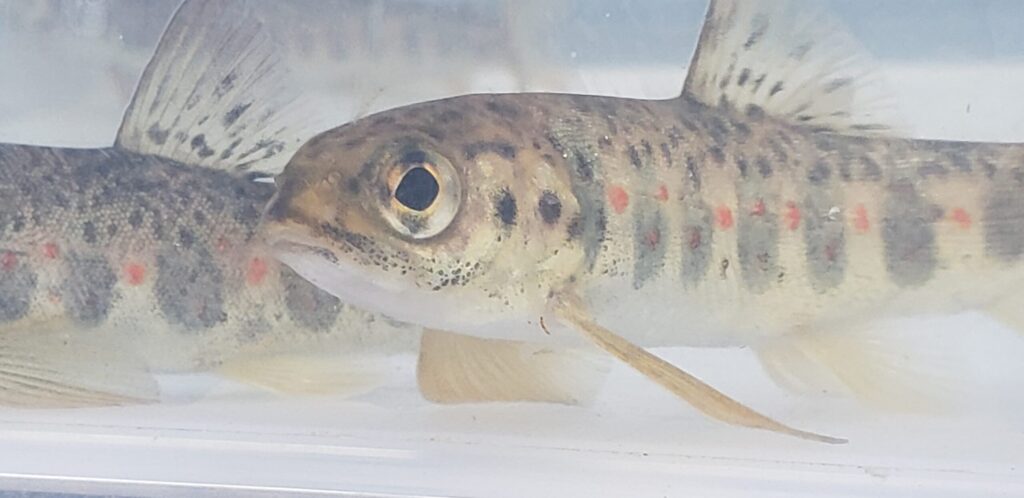
For this paper the authors were interested in examining whether the four Arctic charr morphs in lake Þingvallavatn had different tooth characteristics. If you want to learn more about the Þingvallavatn charr morphs you can read our previous posts here and here. Briefly, the four morphs are generally classified as two benthic morphs (small and large benthivorous charr) and two pelagic morphs (planktivorous and piscivorous charr). The benthic morphs feed on prey which live on the bottom of the lake. However, the pelagic morphs feed on prey which live in the water column.
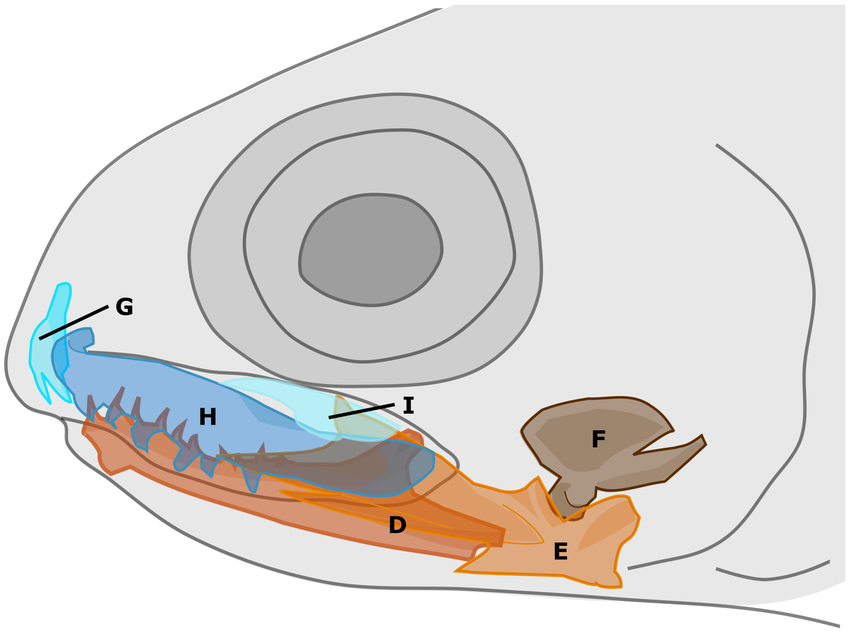
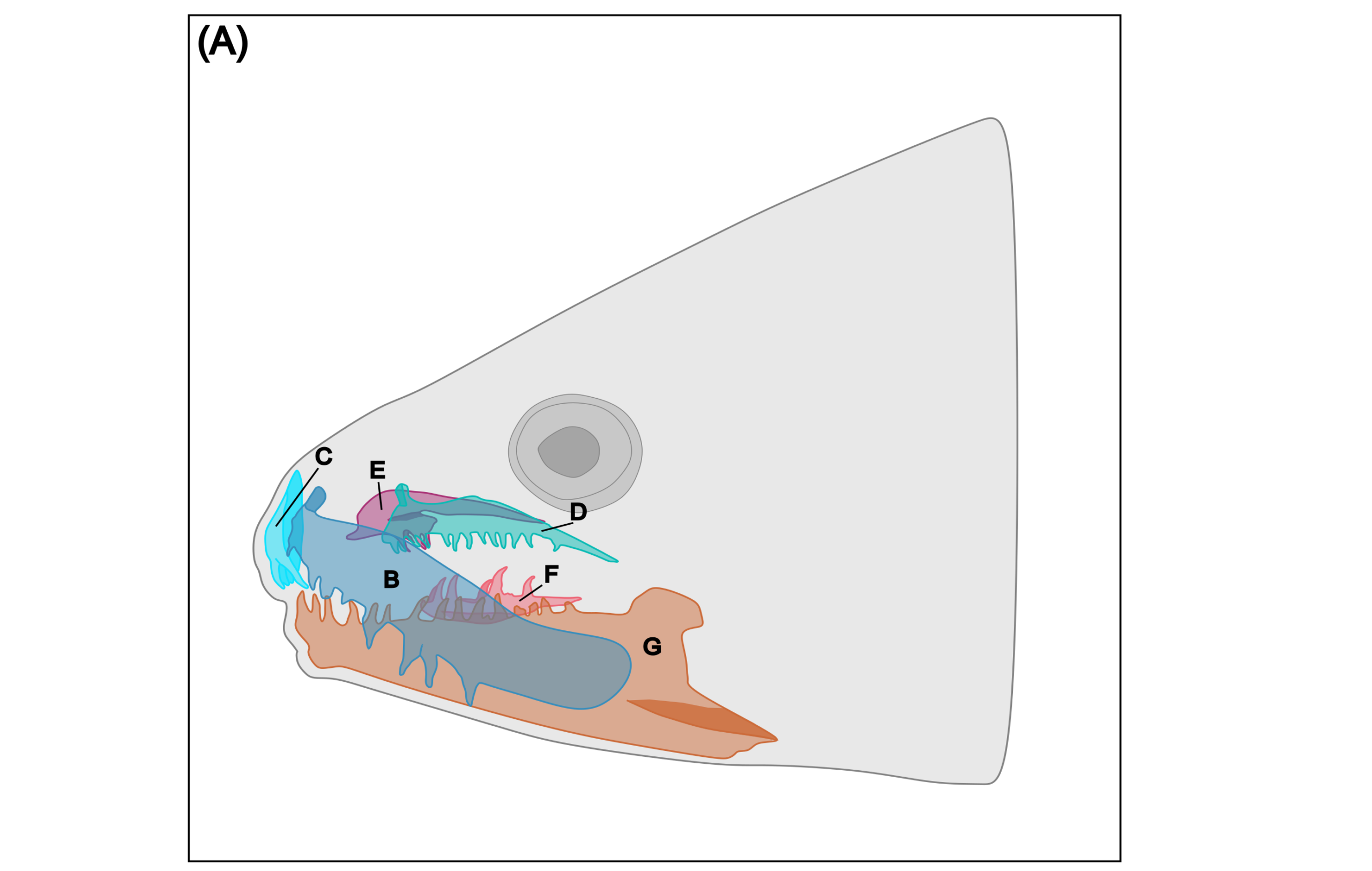
Arctic charr were collected from lake Þinvallavatn during the summers of 2020 and 2021. After collecting the fish, they removed the bones. If you want to learn more about how they did that you can read this previous post. They then counted teeth on six bones and measured the angle of teeth on one bone (maxilla). See figure above to see the bones they used for this study.
Tooth numbers differ but not by much
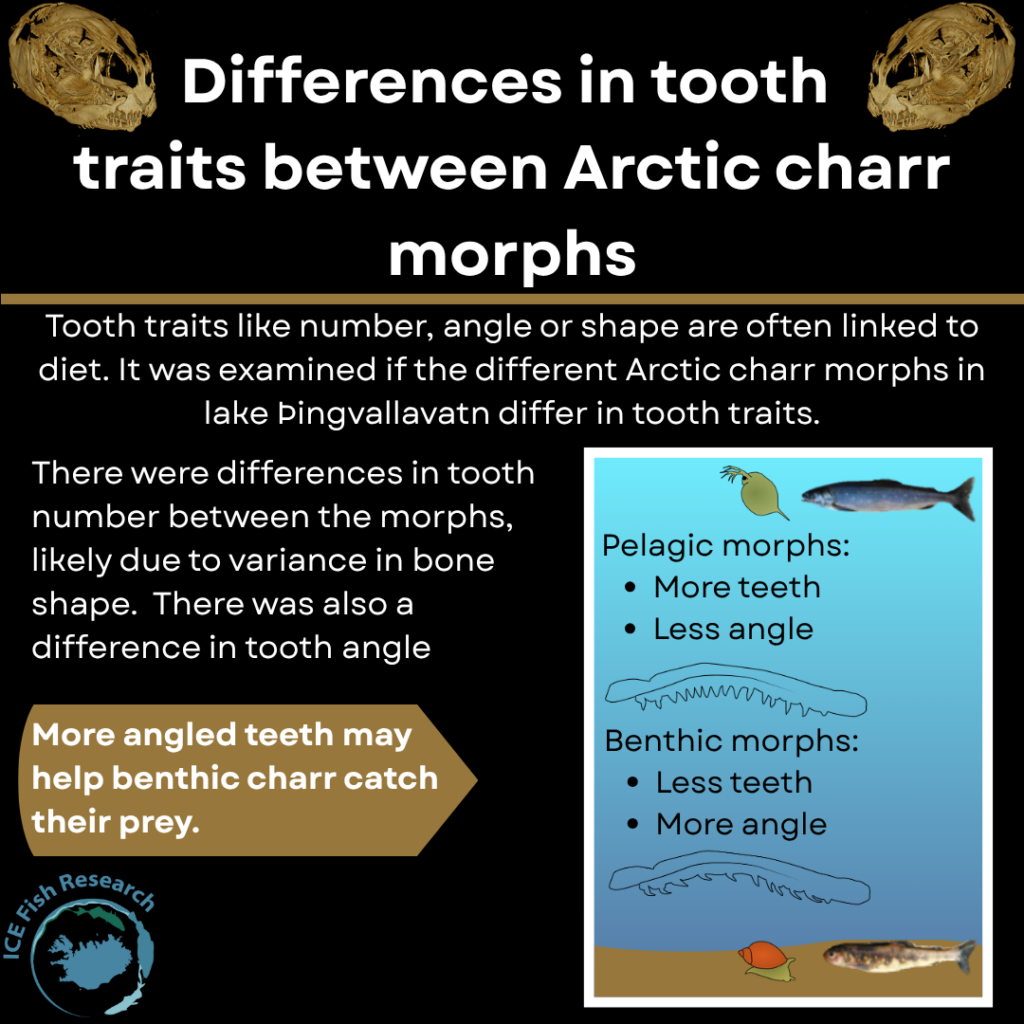
Tooth number generally increased with fish size and tooth number differed between the morphs. With the pelagic morphs having more teeth. However, there were expectations from this pattern. Tooth number on the premaxilla bone did not change with the fish’s size nor did it differ between the morphs. The authors ponder how this could be, wondering if tooth development on that bone is more regulated than for the other bones.
The authors also highlight that the tooth number differences between morphs were small. Maybe a difference of one to three teeth on a bone that has ten or more. Because of this the authors think tooth number differences don’t make much of a difference for the fish. However, since tooth number correlates with bone shape. The authors think differences in bone shape may explain the differences in tooth number.

More angled teeth for benthic charr
Unlike tooth number, tooth angle did not change with fish size. However, there were differences in tooth angle between the morphs with benthic morphs having more angled teeth than the pelagic morphs. Unlike with tooth numbers the tooth angle differences were rather large. For example, there was a 18.5° difference between the small benthic charr and the planktivorous charr.
The authors think this difference may be adaptive. In the paper, they discuss how more angled teeth can help the benthic morphs during feeding. Keep in mind that benthic morphs eat snails from the lake bottom which may have some sediment on them. One idea is that more inward angled teeth allow fish to hook their teeth underneath snails and dislodge them from the bottom. Another idea is that the angled teeth may hold the prey in place while it is being cleaned before swallowing.
Anyone interested in reading more can find the full paper here: https://link.springer.com/article/10.1007/s11692-026-09665-2?utm_source=researchgate.net&utm_medium=article#Sec1