Publication feature

Birta er eins og náttúrleg klukka fyrir þorskseiði (Gadus morhua)

Ný grein eftir Nickel o.fl. 2025 “Seasonal shifts and individual variation in juvenileAtlantic cod diel migration at nearshore nurseries”. doi: 10.3354/meps15056. Til að finna fleiri greinar sem Anja Katrin Nickel hefur gefið út er hægt að skoða þennan hlekk:https://orcid.org/0009-0008-2327-5230 Hver eru meginefni greinarinnar? Margir fiskar synda eftir reglulegu munstri. Ein gerð kallast dægurfar (e. diel […]

Birta er eins og náttúrleg klukka fyrir þorskseiði (Gadus morhua) Read More »
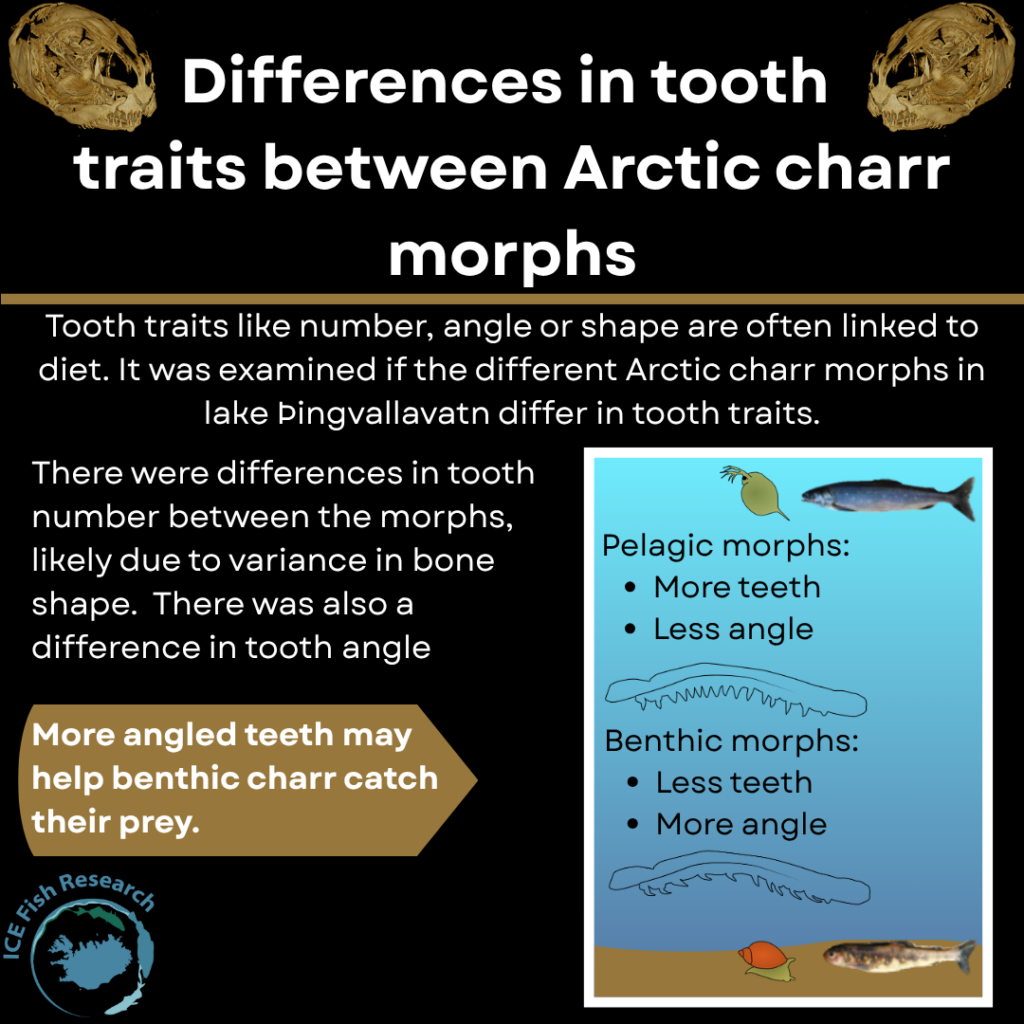
Differences in tooth traits between Arctic charr morphs

In January this year, Guðbjörg Ósk Jónsdóttir along with co-authors Finnur Ingimarsson, Sigurður Sveinn Snorrason, Sarah Elizabeth Steele and Arnar Pálsson. Published a paper in the journal Evolutionary Biology. The paper is titled “Variation of Tooth Traits in Ecologically Specialized and Sympatric Morphs.”   Why fish teeth? When one thinks about variation in teeth, one does

Differences in tooth traits between Arctic charr morphs Read More »

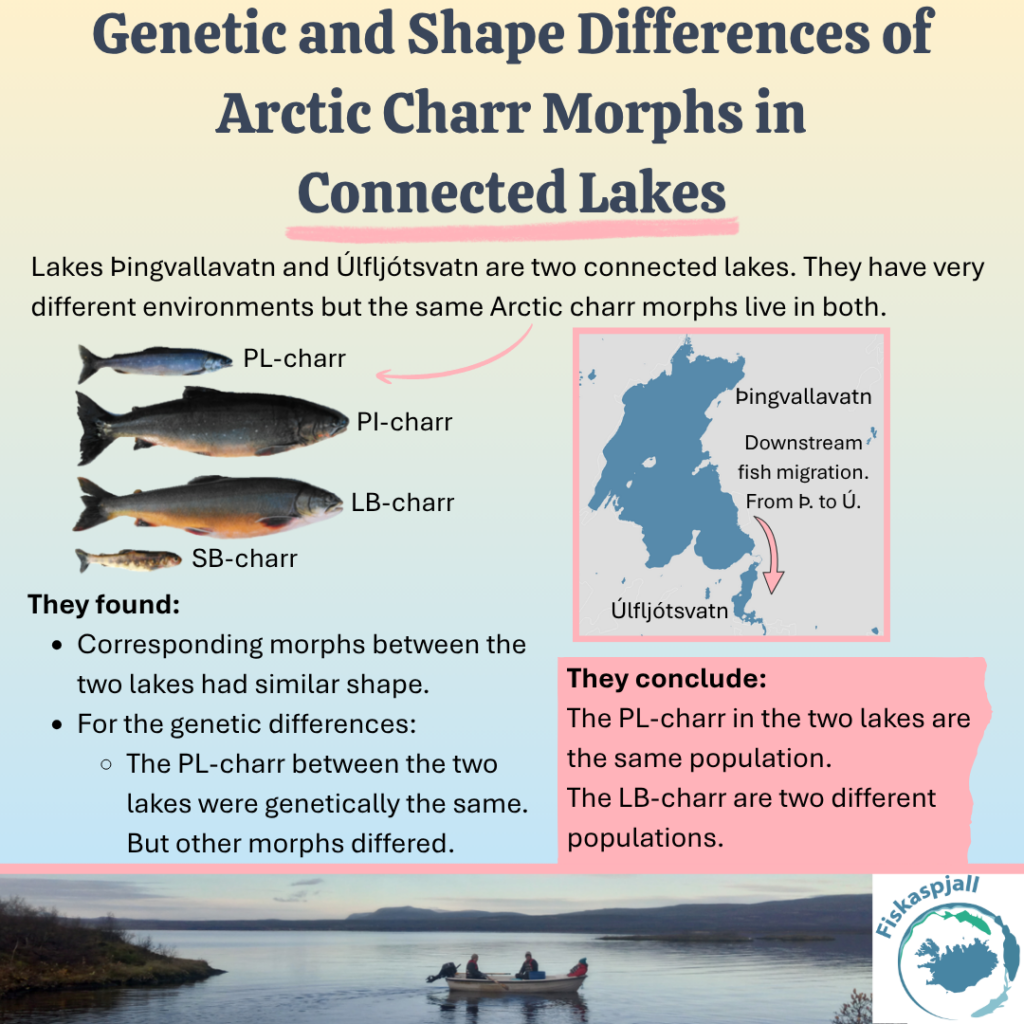
Genetic and Shape Differences of Arctic Charr Morphs in Connected Lakes

Earlier this year Han Xiao along with co-authors Arnar Pálsson, Zophonías O. Jónsson and Sigurður S. Snorrason published a paper in the journal Molecular Ecology. In this paper they explored genetic and shape differences between Arctic charr morphs in two neighbouring lakes in Iceland. They collected different Arctic charr morphs from lake Þingvallavatn and lake

Genetic and Shape Differences of Arctic Charr Morphs in Connected Lakes Read More »

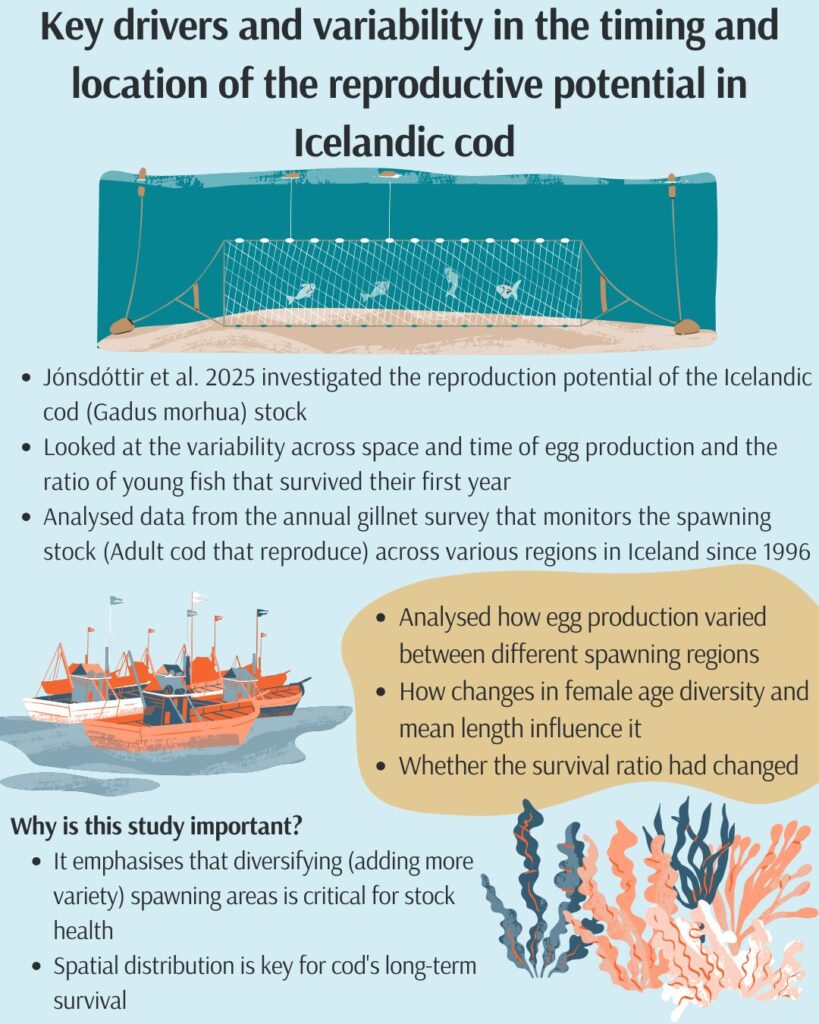
Key Drivers and Variability in the Timing and Location of Reproductive Potential in Icelandic Cod (Gadus morhua)

This past summer, Ingibjörg G. Jónsdóttir at the Marine and Freshwater Research Institute, along with her co-authors Jón Sólmundsson, Peter J. Wright, William Butler, and Pamela Woods, published a paper in the ICES Journal of Marine Science. The study, titled ‘Key drivers and spatio-temporal variation in the reproductive potential of Icelandic cod’, investigates the roles

Key Drivers and Variability in the Timing and Location of Reproductive Potential in Icelandic Cod (Gadus morhua) Read More »

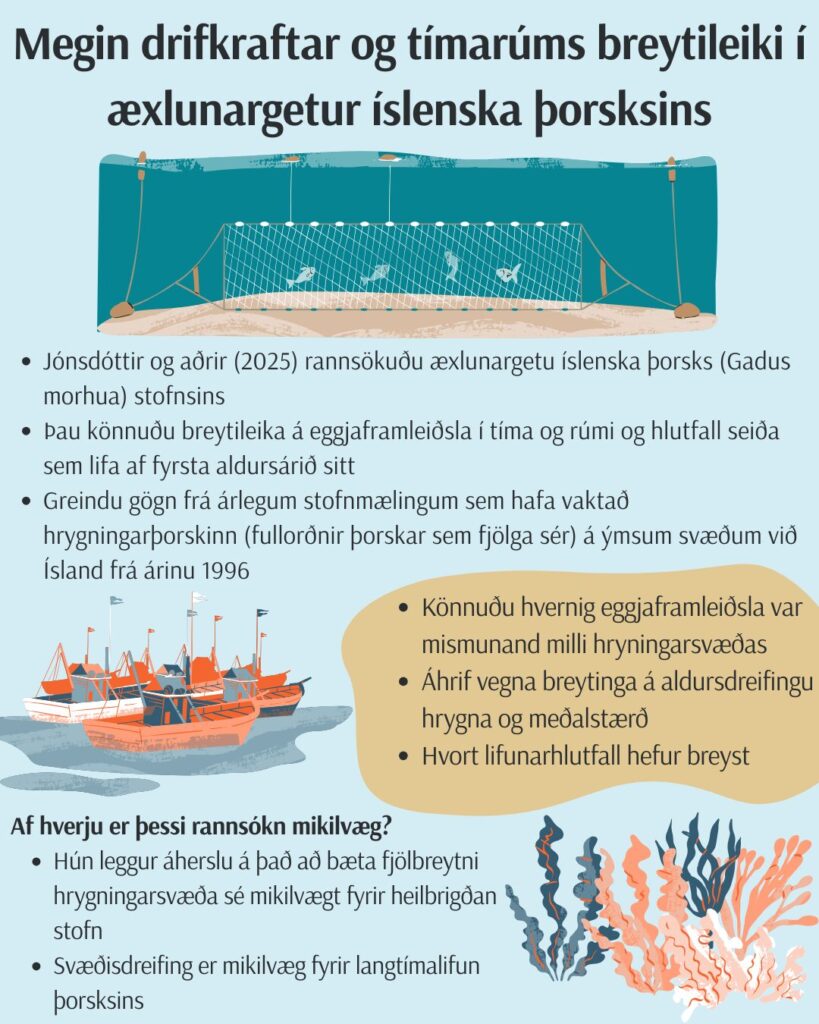
Megin drifkraftar og tímarúms breytileiki í æxlunargetur íslenska þorsksins (Gadus morhua)

Síðasta sumar birti Ingibjörg G. Jónsdóttir hjá Hafrannsóknastofnun Íslands ásamt meðhöfundum sínum þeim Jóni Sólmundarsyni, Peter J. Wright, William Butler, og Pamela Woods grein í tímaritinu ICES Journal of Marine Science. Rannsóknin sem ber heitið „Megin drifkraftar og tímarúms breytileiki í æxlunargetur íslenska þorsksins“, kannaði heildar eggjaframleiðslu og lifun þorskseiða fyrsta árið sitt (hversu mörg

Megin drifkraftar og tímarúms breytileiki í æxlunargetur íslenska þorsksins (Gadus morhua) Read More »

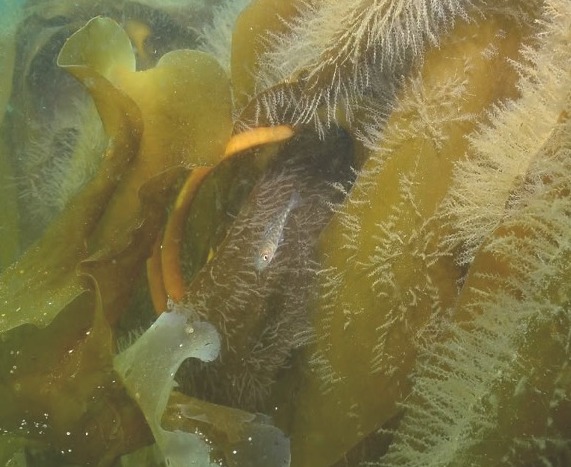
Dive Surveys Alongside Beach Seining Help Locate Young Atlantic Cod and Saithe in Shallow Coastal Areas

    What are fish nursery grounds? Nursery grounds are places where young fish find food, favourable temperature and protection from predators during their early life stages. Different species of fish, including Atlantic cod (Gadus morhua) and saithe (Pollachius virens) juveniles, settle in nearshore areas at different times and depths, depending for example on the

Dive Surveys Alongside Beach Seining Help Locate Young Atlantic Cod and Saithe in Shallow Coastal Areas Read More »

Mín þýðing: Köfunarkannanir ásamt notkun landnóts hjálpa við að finna þorska og ufsa seiði á grunnsævi

    Hvað eru uppeldissvæði fiska?  Uppeldissvæði eru svæði þar sem seiði og ungir fiskar geta fundið fæði, hagstætt hitastig og öryggi frá rándýrum. Mismunandi tegundir af fiskum, eins og þorska (Gadus morhua) og ufsa (Pollachius virens) seiði, setjast að á svæðum við ströndina á mismunandi tíma og við mismunandi dýpi. Til dæmis getur tímasetning

Mín þýðing: Köfunarkannanir ásamt notkun landnóts hjálpa við að finna þorska og ufsa seiði á grunnsævi Read More »

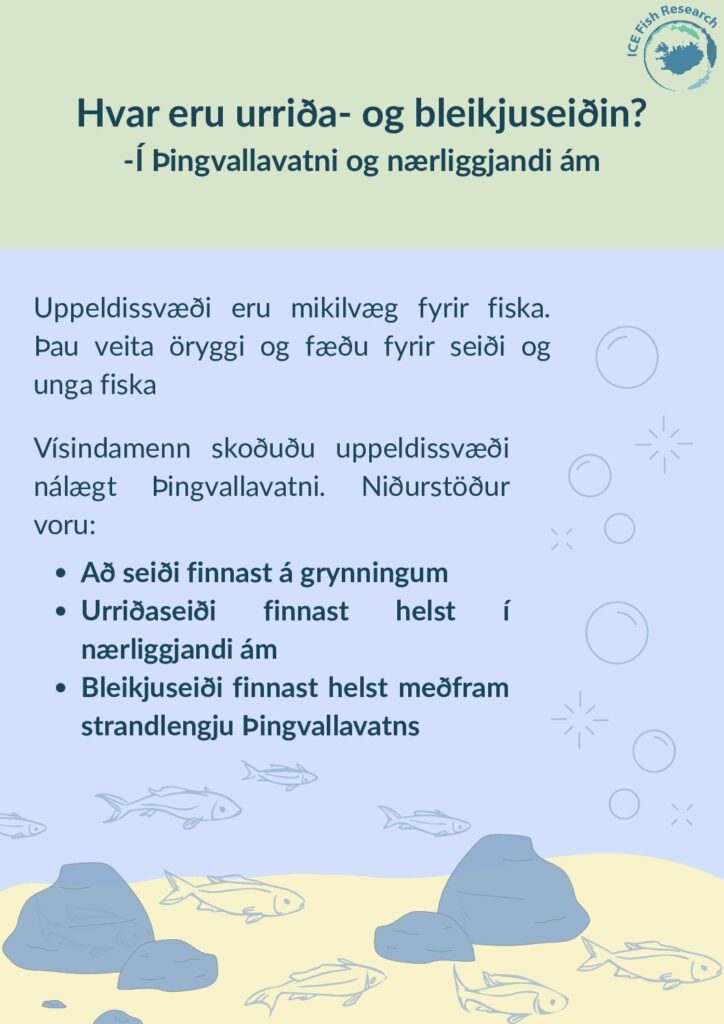
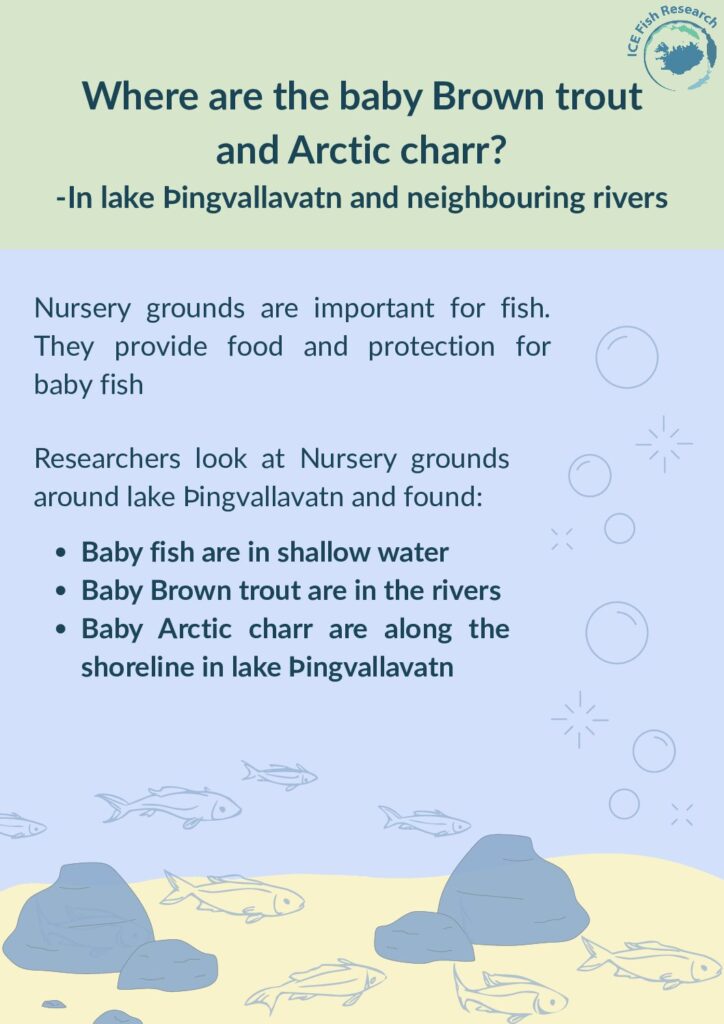
Where are the baby Brown trout and Arctic charr?

  Nursery grounds are habitats mainly used by juvenile (baby) fish. As the name suggests these habitats are like nurseries for fish. Nursery grounds are very important for the fish species using them. Since they provide protection and food for the young. Therefore, knowing where they are and how they are holding up is important.

Where are the baby Brown trout and Arctic charr? Read More »