PRV (Piscineorthoreovirus) is a virus that affects the heart and muscles of salmonids. This can cause major losses in aquaculture and impact ecosystem health. But until now it was unknown how widespread this virus is among Icelandic salmonids. At Keldur, the Institute for experimental pathology, a team led by Dr. Birkir Þor Bragason set out to find more about PRV in Iceland.
In Iceland, salmonids (Arctic charr, Atlantic salmon and brown trout) are important fish culturally and economically. PRV is found in these fish worldwide. So, the team at Keldur set out to understand whether this virus is also present in Icelandic salmonids and how often it occurs.
Determining if a fish has the virus
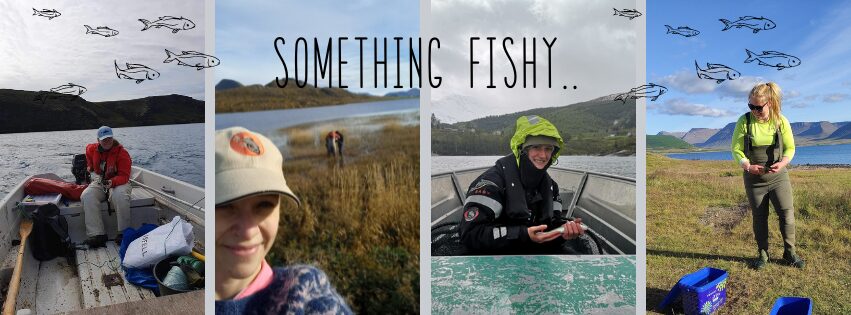
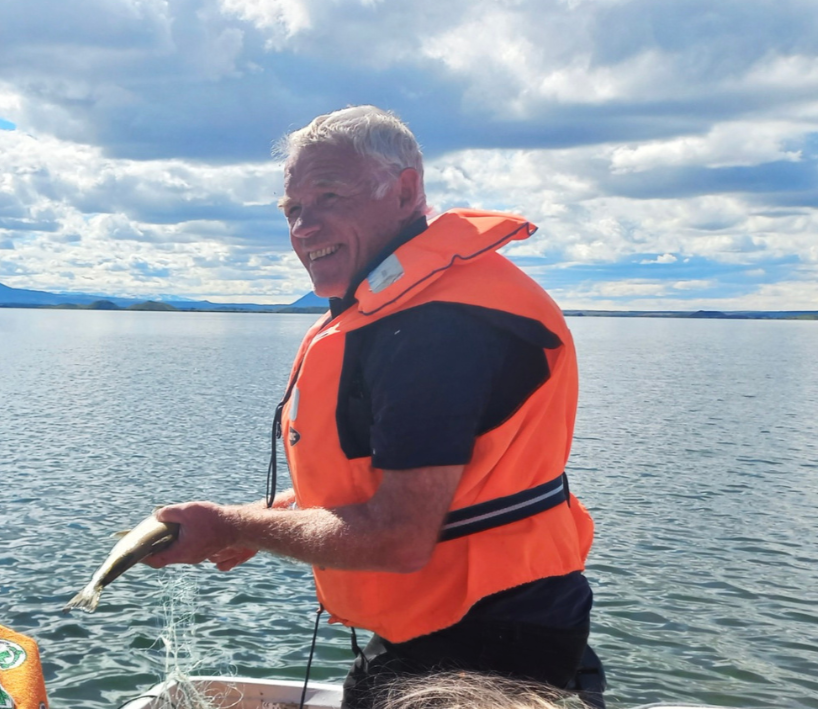
First, they had to catch fish. Birkir, Heiða Sigurðardóttir, Marina de la Cámara and Árni Kristmundsson who work in Keldur took care of the sample collection that took place between 2015 to 2025. They caught fish of different species and ages in the wild and from aquaculture. In total, 837 Atlantic salmon, 254 Arctic charr and 105 brown trout were used in this study. They came from eight different lakes, three restocked streams and eight farms across the country.
Heiða and Marina then tested the fish for the virus (find the structure of the virus in the illustration below). And Marina checked whether there were different variants of the virus and whether these variants were connected to the fish species or environment.
Lastly, Árni looked into the tissue of the infected fish to see how the virus affects the structure of the tissue.
Illustration of the structural proteins of PRV.
PRV can be found in Icelandic salmonids
They found PRV in quite a few of the fish. PRV was detected in all three species: Arctic charr, Atlantic salmon and brown trout, and in both farmed and wild fish. Furthermore, they found different strains of PRV. In the figure below you can see the percentages of fish that had PRV detected. For example, all farmed Atlantic salmon had a PRV infection. And PRV was detected in 75% of farmed Arctic charr. They also looked at whether infection rates were linked to the environment the fish lived in. They observed higher infection rates in farmed Atlantic salmon and Arctic charr than in wild fish. Few wild brown trout were infected.
Notably, this is the first detection of PRV in Arctic charr worldwide and in brown trout from Iceland.
A figure that shows the fish included in the study. The rings indicate an average percentage of PRV-positive cases across locations.
What does this mean for Iceland?
This is the first study to show PRV infection in Arctic charr and Icelandic brown trout. This information helps us better understand which fish species are affected by PRV.
Fortunately, PRV is not causing major effects in farmed and wild populations in Iceland at the moment. But researchers need to stay alert, because changes in environmental conditions (such as warming of the waters) can lead to an increase in PRV infections in Iceland.
That is why continued study of the virus is important for understanding how it affects Icelandic salmonids. An important next step is also testing the non-native salmonid species (pink salmon and rainbow trout) to see how they are affected.